USA-shipped research peptides for laboratory use only

Research Guide:
An Online Reference for Researchers

Research peptides are key to advancing science in biochemistry, cell biology and molecular research. This knowledge center provides laboratory scientists with the technical information and practical guidance to select, handle and work with research-grade peptides for in vitro and ex vivo applications.

Research laboratory

USA-shipped research peptides are for laboratory use only and not for human consumption, clinical use or diagnostic purposes. This guide is dedicated to supporting scientific research through proper peptide selection, handling and experimental design.

Your Online Peptide Guide for Research Applications

Whether you are new to peptide research or looking to expand your laboratory capabilities, this guide to peptides is your go-to resource for understanding, synthesizing and working with research peptides. From basics to advanced techniques, we have compiled the most important information to support your scientific investigations.

Peptides in Research

Peptides are short chains of amino acids that play crucial roles in biological processes, making them valuable tools for scientific research. These versatile molecules serve as hormones, neurotransmitters, signaling compounds and regulatory factors in living systems.

For laboratory researchers, peptides offer advantages in studying cellular mechanisms, protein interactions and biochemical pathways through controlled in vitro and ex vivo experimental systems.

The peptide research field has grown rapidly with improvements in synthesis technologies and a deeper understanding of peptide biology.

Today, research labs rely on high-quality, well-characterized peptides to run reproducible experiments and generate meaningful data in controlled environments.

Peptides in research
Quality matters in research

Why Quality Matters in Peptide Research

Your research depends heavily on peptide quality and consistency. Purity, stability and proper storage can significantly impact outcomes. Understanding these factors supports reliable results and protects the integrity of scientific work.

Modern peptide synthesis and purification techniques produce research-grade peptides with defined specifications so laboratory teams can work with confidence in experimental design.

Essential Peptide Research Guides

Choose Your Focus
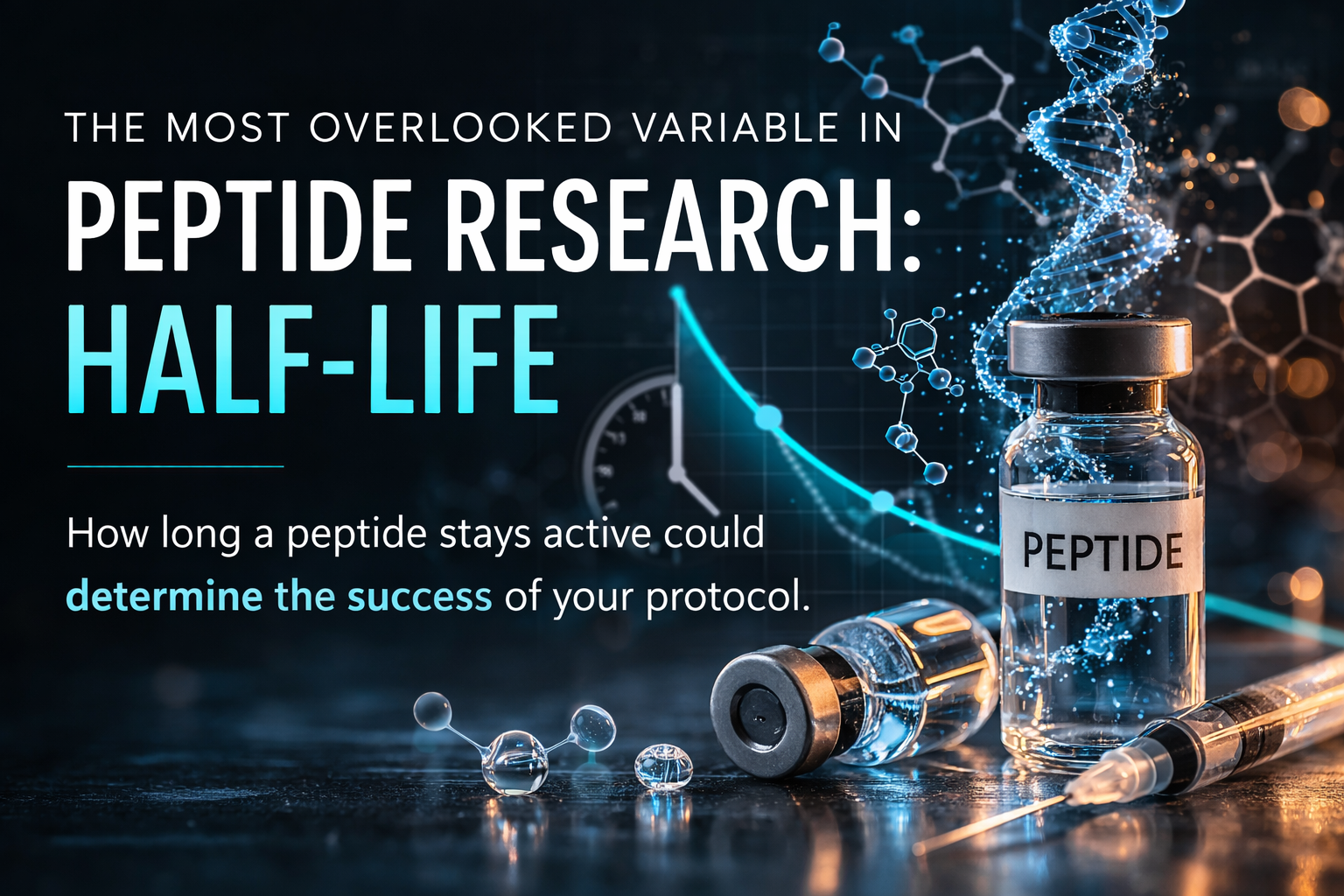
  • The Most Overlooked Variable in Peptide Research: Half-Life

    Most people spend hours researching which peptide they’re interested in studying. Very few spend five minutes understanding how long that peptide actually remains active in the body. And that’s where a lot of confusion starts. Every peptide has what researchers call a half-life—the amount of time it takes for the concentration of a compound to Read More

  • How Weight Regulation and Longevity Research Are Converging in a New Class of Peptides

    In metabolic research, two goals have traditionally been studied separately: weight regulation and healthy aging. One focuses on energy balance and body composition. The other examines cellular processes associated with long-term biological resilience. Increasingly, scientists are beginning to explore whether these two areas may be more closely connected than previously understood. One reason is the Read More

  • Overview of Peptide Research

    This article is intended for educational purposes only and is directed exclusively at licensed researchers. The peptides discussed herein are not for human or animal use and should only be utilized for in vitro research. The information provided is based on published scientific research and should not be considered medical advice. Introduction to Research Peptides Read More

  • Why Peptide Purity is not Enough

    Peptide safety isn’t just about “high purity.” For serious peptide research, purity, sterility, endotoxin, and assay testing all matter—and this is exactly where Molecule Peptides sets the industry standard.​ Why Testing Matters for Peptide Research Peptide researchers, clinicians, and advanced biohackers increasingly demand GMP-like quality, not hobby-grade powders. In this environment, vendors that only advertise Read More

  • Mitochondria, Microproteins, and Metabolic Health: From Endosymbiosis to Redox and Aging

    Origins and Evolution of Mitochondria Mitochondria were first described morphologically by Richard Altmann in 1890, who referred to them as “bioblasts,” but their evolutionary origins were clarified much later. In 1967, Lynn Margulis (then Sagan) articulated the endosymbiotic theory, proposing that mitochondria arose from an ancestral α‑proteobacterium engulfed by a proto-eukaryotic cell, explaining the presence Read More

  • BPC-157: Gastric Pentadecapeptide for Experimental Cytoprotection, Angiogenesis, and Tissue Repair

    Origins, Chemistry, and Structural Biology BPC-157 (Body Protection Compound 157) is a synthetic pentadecapeptide (sequence: GEPPPGKPADDAGLV) derived from a partial sequence of a larger “body protection compound” originally isolated from human gastric juice and reported to be highly conserved among mammals. It has a molecular mass of approximately 1,414 Da and displays amphipathic characteristics that Read More

Tools and Resources for Peptide Researchers

Discover our growing library of tools and resources

Peptide calculator

Peptide Calculator

Accurately reconstitute lyophilized peptides for research applications with this easy-to-use dilution calculator and guide. Learn proper techniques for dissolving freeze-dried peptides, choosing appropriate diluents, calculating concentrations and avoiding common mistakes.

Research peptides are for laboratory use only and not intended for human consumption or clinical applications.

The owner of this website has made a commitment to accessibility and inclusion, please report any problems that you encounter using the contact form on this website. This site uses the WP ADA Compliance Check plugin to enhance accessibility.
0
    0
    Your Cart
    Your cart is emptyReturn to Shop