Description
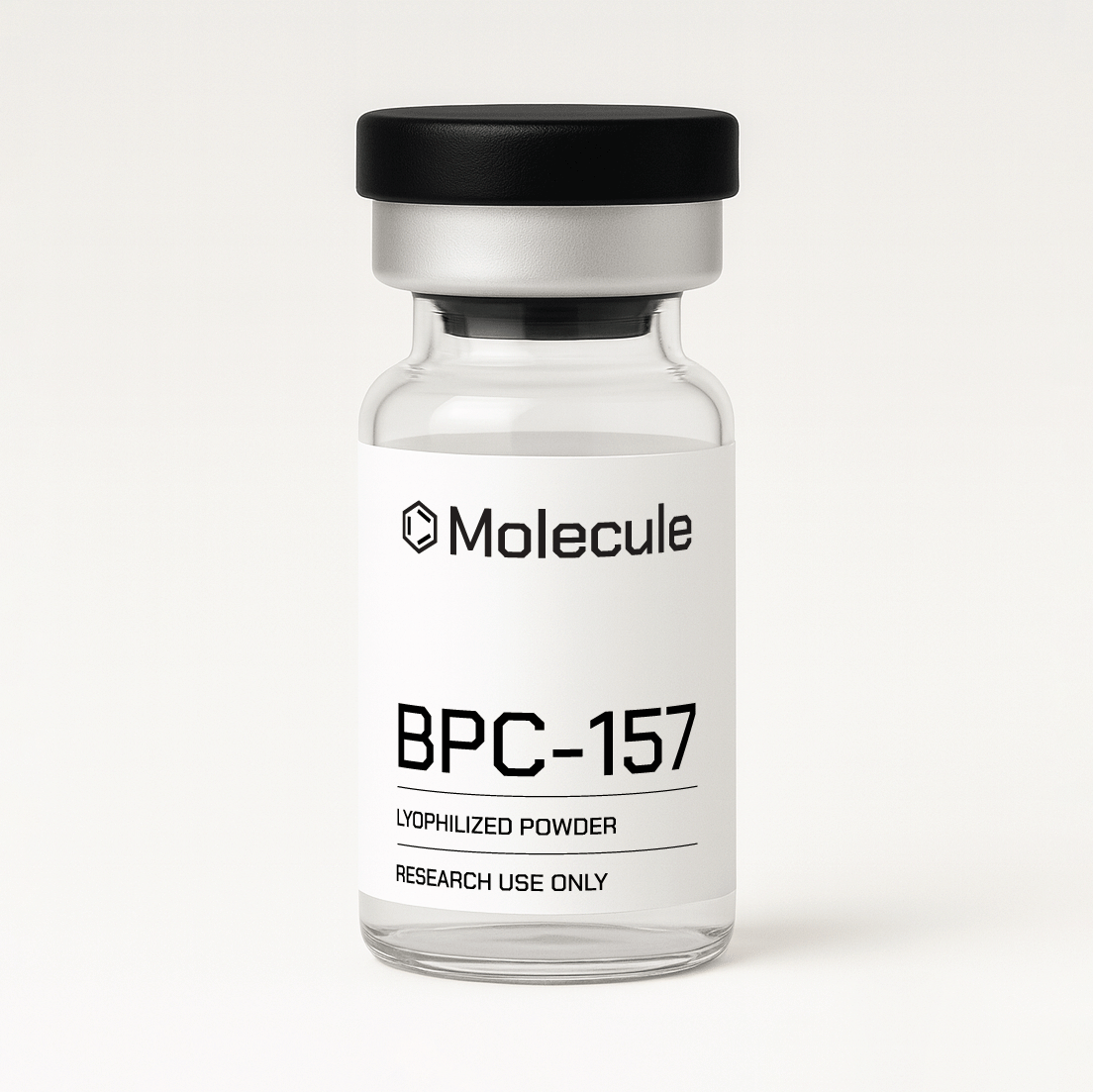
BPC-157 (Body Protection Compound-157)
BPC-157 (Body Protection Compound-157) is a synthetic pentadecapeptide consisting of 15 amino acids, originally identified as a naturally occurring protein fragment in human gastric juice. It is widely utilized as a research peptide in laboratory and preclinical studies focused on tissue integrity, vascular signaling, and regenerative biological processes.
Due to its molecular stability and broad signaling profile, BPC-157 is frequently employed in experimental research models that investigate complex biological repair and adaptation mechanisms. Preclinical studies have explored its involvement across multiple systems, including tissue injury models, gastrointestinal integrity research, vascular function studies, and central nervous system signaling pathways.
Rather than acting on a single molecular target, BPC-157 has been investigated for its pleiotropic signaling behavior, including interactions related to angiogenic processes, inflammatory pathway modulation, and growth factor–associated signaling. These characteristics have positioned BPC-157 as a compound of ongoing interest within the scientific literature for researchers studying coordinated biological repair mechanisms.
Peptide Identity and Molecular Profile
| Property | Description |
|---|---|
| Peptide Name | BPC-157 |
| Full Name | Body Protection Compound-157 |
| Peptide Class | Synthetic pentadecapeptide |
| Amino Acid Length | 15 residues |
| Peptide Sequence | GEPPPGKPADDAGLV |
| Molecular Weight | 1,419.55 Da |
| Biological Origin | Endogenous fragment identified in human gastric juice |
Chemical and Registry Information
| Property | Value |
|---|---|
| Molecular Formula | C₂₂₃H₃₄₃F₃N₄₆O₇₀ |
| CAS Number | 2381089-83-2 |
| PubChem SID | 474492335 |
| Synonyms | 2381089-83-2, LY-3437943, NOP2Y096GV |
Biological Pathways Studied (Preclinical Research)
In laboratory and preclinical research environments, BPC-157 has been studied for interactions with multiple biological signaling pathways. These investigations focus on molecular and cellular mechanisms rather than clinical outcomes.
| Pathway / System | Research Context |
|---|---|
| VEGF Signaling | Studied in relation to angiogenesis and vascular remodeling |
| Growth Factor Pathways | Investigated interactions with EGF, FGF, and TGF-β signaling |
| Nitric Oxide Signaling | Examined for roles in endothelial function and blood flow regulation |
| Neurotransmitter Systems | Explored in serotonergic and dopaminergic signaling research |
Research Applications
BPC-157 is commonly used in laboratory research involving:
• Tissue repair and regeneration models
• Gastrointestinal integrity studies
• Tendon and ligament research models
• Vascular and endothelial signaling investigations
• Recovery and remodeling processes in experimental injury models
Storage and Handling Guidelines
Store BPC-157 in a cool, dry place and protect from light. Maintain appropriate laboratory storage conditions to preserve peptide stability. Handle all research peptides using standard laboratory safety protocols.
Lyophilized Powder
BPC-157 is provided in lyophilized powder form, produced through freeze-drying to remove residual moisture while maintaining peptide conformation and chemical stability. This format supports accurate quantification and reproducibility in controlled research protocols.
Shelf Life After Reconstitution
Once reconstituted, BPC-157 is no longer in its lyophilized state, and its stability characteristics differ from those of the dry powder. In research contexts, reconstituted peptide material is generally regarded as having a short-term usable shelf life, commonly cited in laboratory settings as on the order of days rather than weeks. Consideration of post-reconstitution stability is a standard component of experimental planning and data quality management in peptide research. Actual stability may vary based on research-specific conditions and environmental factors.