Description
CJC-1295 DAC (Growth Hormone–Releasing Hormone Analog, Drug Affinity Complex)
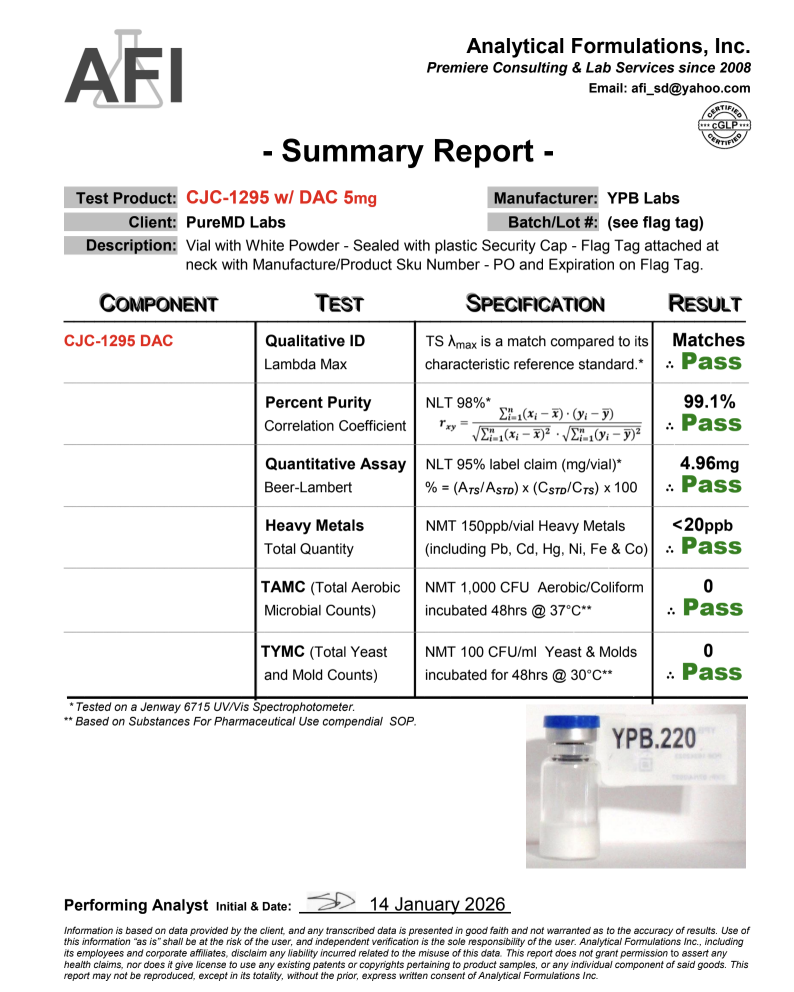
CJC-1295 DAC is a synthetic peptide analog of growth hormone–releasing hormone (GHRH) engineered with a Drug Affinity Complex (DAC) to extend its persistence in biological systems through albumin binding. In laboratory and preclinical research contexts, CJC-1295 DAC is utilized as a research tool to investigate neuroendocrine signaling, peptide–protein interactions, and hormone regulation mechanisms.
In experimental models, CJC-1295 DAC has been explored for its interaction with GHRH receptors (GHRHR) and its influence on downstream endocrine signaling pathways. The DAC modification enables researchers to study prolonged peptide–receptor engagement and altered pharmacokinetic profiles compared to native GHRH fragments, making it useful in comparative peptide signaling studies.
Rather than functioning as a native hormone, CJC-1295 DAC is designed to mimic and modulate endogenous peptide signaling within controlled research systems. Its structural modifications and receptor specificity have positioned it as a compound of interest in preclinical investigations focused on hypothalamic–pituitary axis signaling and peptide stabilization strategies.
Peptide Identity and Molecular Profile
| Property | Description |
|---|---|
| Peptide Name | CJC-1295 DAC |
| Full Name | Growth Hormone–Releasing Hormone Analog with Drug Affinity Complex |
| Peptide Class | Synthetic peptide hormone analog |
| Amino Acid Length | 30 residues (modified GHRH analog) |
| Structural Modification | Drug Affinity Complex (DAC) for albumin binding |
| Molecular Weight | ~3,650 Da (varies by synthesis/salt form) |
| Biological Target (Research Context) | GHRH receptor (GHRHR) |
Chemical and Registry Information
| Property | Value |
|---|---|
| Molecular Formula | Reported in research literature; may vary by salt form |
| CAS Number | 863288-34-0 (reported in research literature) |
| Registry Identifiers | Research designation: CJC-1295 DAC |
| Synonyms | DAC:GHRH(1–29), CJC-1295 with DAC |
| Structural Features | GHRH analog with albumin-binding moiety |
Biological Pathways Studied (Preclinical Research)
In laboratory and preclinical research environments, CJC-1295 DAC has been studied for its interactions with neuroendocrine and peptide signaling systems. These investigations focus on molecular signaling mechanisms rather than physiological or clinical outcomes.
| Pathway / System | Research Context |
|---|---|
| GHRH Receptor Signaling | Studied for receptor activation and downstream signaling |
| Hypothalamic–Pituitary Axis | Explored in endocrine regulation models |
| cAMP/PKA Pathway | Investigated as part of GHRH-mediated signal transduction |
| Peptide–Albumin Binding | Examined for extended peptide persistence |
| Endocrine Feedback Networks | Studied in controlled hormone signaling systems |
Research Applications
CJC-1295 DAC is commonly used in laboratory research involving:
-
GHRH receptor signaling studies
-
Neuroendocrine pathway modeling
-
Peptide stabilization and half-life extension research
-
Albumin-binding peptide design investigations
-
Comparative studies of GHRH analogs
All applications are limited to preclinical, in vitro, or animal research settings.
Storage and Handling Guidelines
CJC-1295 DAC should be stored under controlled laboratory conditions in a cool, dry environment and protected from light. Standard laboratory handling procedures for synthetic peptides should be followed to preserve structural integrity and experimental reproducibility.
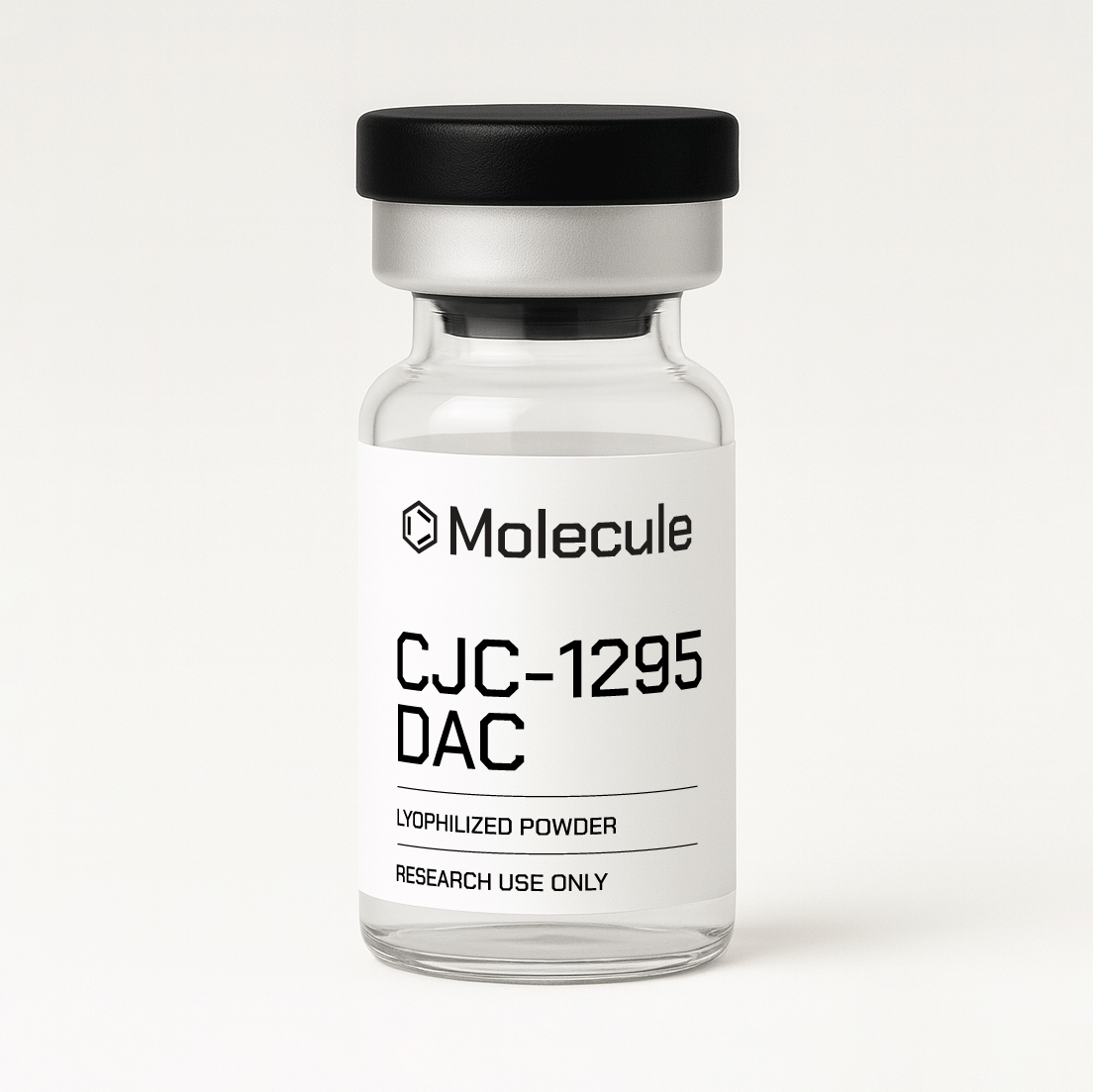
Lyophilized Powder
CJC-1295 DAC is supplied as a lyophilized powder, produced through freeze-drying to remove residual moisture while maintaining peptide conformation and chemical stability. This format supports accurate reconstitution, precise dosing for experimental design, and long-term storage under appropriate conditions.
Shelf Life After Reconstitution
Once reconstituted, CJC-1295 DAC is no longer in its lyophilized state, and stability characteristics depend on buffer composition, temperature, handling frequency, and study duration. In research environments, reconstituted peptide solutions are generally treated as suitable for short-term experimental use, with stability considerations incorporated into protocol planning and data-integrity assessment. Actual stability may vary based on laboratory-specific conditions.