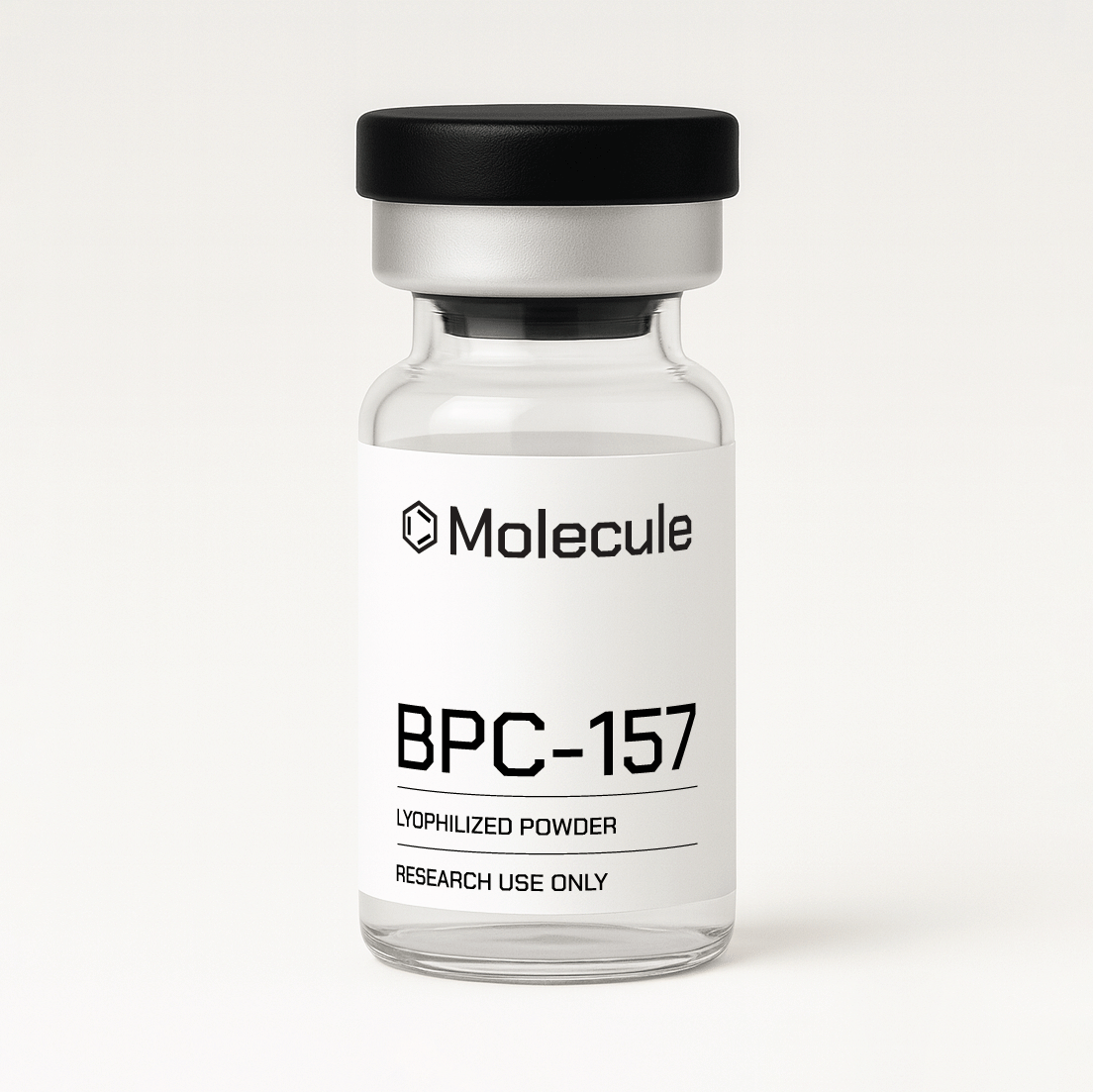
BPC-157

BPC-157 (Body Protection Compound-157) is a synthetic peptide that may support tissue healing, recovery, and gastrointestinal health.

Price range: $50.00 through $180.00

Size

Fast processing & shipping

Orders are processed and shipped within 1–2 business days to ensure timely delivery of research materials.

All sales final

Due to the nature of laboratory research materials, all sales are final once shipped. No returns or refunds on delivered items.

Limited refund eligibility

Refunds or replacements are only issued for incorrect, damaged, or undelivered orders. Claims must be submitted within 48 hours with supporting photos.

Description

BPC-157 (Body Protection Compound-157)

BPC-157 (Body Protection Compound-157) is a synthetic pentadecapeptide consisting of 15 amino acids, originally identified as a naturally occurring protein fragment in human gastric juice. It is widely utilized as a research peptide in laboratory and preclinical studies focused on tissue integrity, vascular signaling, and regenerative biological processes.

Due to its molecular stability and broad signaling profile, BPC-157 is frequently employed in experimental research models that investigate complex biological repair and adaptation mechanisms. Preclinical studies have explored its involvement across multiple systems, including tissue injury models, gastrointestinal integrity research, vascular function studies, and central nervous system signaling pathways.

Rather than acting on a single molecular target, BPC-157 has been investigated for its pleiotropic signaling behavior, including interactions related to angiogenic processes, inflammatory pathway modulation, and growth factor–associated signaling. These characteristics have positioned BPC-157 as a compound of ongoing interest within the scientific literature for researchers studying coordinated biological repair mechanisms.


Peptide Identity and Molecular Profile

Property Description
Peptide Name BPC-157
Full Name Body Protection Compound-157
Peptide Class Synthetic pentadecapeptide
Amino Acid Length 15 residues
Peptide Sequence GEPPPGKPADDAGLV
Molecular Weight 1,419.55 Da
Biological Origin Endogenous fragment identified in human gastric juice

Chemical and Registry Information

Property Value
Molecular Formula C₂₂₃H₃₄₃F₃N₄₆O₇₀
CAS Number 2381089-83-2
PubChem SID 474492335
Synonyms 2381089-83-2, LY-3437943, NOP2Y096GV

Biological Pathways Studied (Preclinical Research)

In laboratory and preclinical research environments, BPC-157 has been studied for interactions with multiple biological signaling pathways. These investigations focus on molecular and cellular mechanisms rather than clinical outcomes.

Pathway / System Research Context
VEGF Signaling Studied in relation to angiogenesis and vascular remodeling
Growth Factor Pathways Investigated interactions with EGF, FGF, and TGF-β signaling
Nitric Oxide Signaling Examined for roles in endothelial function and blood flow regulation
Neurotransmitter Systems Explored in serotonergic and dopaminergic signaling research

Research Applications

BPC-157 is commonly used in laboratory research involving:

• Tissue repair and regeneration models
• Gastrointestinal integrity studies
• Tendon and ligament research models
• Vascular and endothelial signaling investigations
• Recovery and remodeling processes in experimental injury models


Storage and Handling Guidelines

Store BPC-157 in a cool, dry place and protect from light. Maintain appropriate laboratory storage conditions to preserve peptide stability. Handle all research peptides using standard laboratory safety protocols.

Lyophilized Powder

BPC-157 is provided in lyophilized powder form, produced through freeze-drying to remove residual moisture while maintaining peptide conformation and chemical stability. This format supports accurate quantification and reproducibility in controlled research protocols.

Shelf Life After Reconstitution

Once reconstituted, BPC-157 is no longer in its lyophilized state, and its stability characteristics differ from those of the dry powder. In research contexts, reconstituted peptide material is generally regarded as having a short-term usable shelf life, commonly cited in laboratory settings as on the order of days rather than weeks. Consideration of post-reconstitution stability is a standard component of experimental planning and data quality management in peptide research. Actual stability may vary based on research-specific conditions and environmental factors.

BPC-157 Research Overview

BPC-157 (Body Protection Compound-157) is a synthetic pentadecapeptide (15 amino acids) with sequence GEPPPGKPADDAGLV, molecular weight ~1,419 Da, and molecular formula C₆₂H₉₈N₁₆O₂₂. Derived from naturally occurring gastric proteins, BPC-157 is utilized in preclinical and in vitro research to investigate cytoprotection, angiogenesis, growth factor signaling, nitric oxide modulation, and tissue repair mechanisms. Laboratory studies have explored its activity across endothelial, fibroblast, and epithelial systems, emphasizing pleiotropic signaling effects rather than therapeutic outcomes.

Note: All mechanistic insights derive from laboratory or animal models. This compound is research-use only and not intended for human or veterinary application.


Mechanism of Action in Laboratory Models

BPC-157 has been investigated for multiple preclinical signaling pathways:

  • Angiogenesis and Endothelial Signaling

    • Laboratory models explore modulation of vascular endothelial growth factor (VEGF) pathways using endothelial tube formation assays (Sikiric et al., 2013).

  • Growth Factor Modulation

    • Studies examine fibroblast growth factor (FGF) and epidermal growth factor (EGF) signaling in fibroblast and epithelial culture systems.

  • Nitric Oxide (NO) Signaling

    • Preclinical assays investigate NO-dependent vascular effects and endothelial function, typically in rodent or in vitro models.

  • Cytoskeletal and ECM Interactions

    • BPC-157 influences fibroblast migration, collagen deposition, and epithelial barrier function in wound healing and tendon/ligament assays.


Primary Research Findings

Mechanistic studies in preclinical and in vitro models demonstrate:

  • Tissue Repair and Cytoprotection

    • Investigations using tendon, ligament, and muscle injury models focus on fibroblast migration, collagen synthesis, and angiogenic endpoints (Sikiric et al., 2013).

  • Gastrointestinal Integrity

    • BPC-157 is studied in gastric and intestinal injury models, assessing epithelial barrier function, ulcer endpoints, and cytoprotective signaling (Sikiric et al., 2013).

  • Vascular and Endothelial Function

    • Preclinical assays examine NO-mediated endothelial effects, microvascular flow, and angiogenesis (Sikiric et al., 2013).

Note: Reported effects are mechanistic observations in laboratory research; direct clinical translation is not established.


Research Applications

Tissue Integrity and Regenerative Research

  • Investigations include tendon/ligament repair, fibroblast migration, collagen deposition, and extracellular matrix signaling.

Gastrointestinal Research

  • Laboratory models examine ulceration, epithelial protection, and barrier integrity.

Vascular Signaling Studies

  • Research explores angiogenic processes, microvascular function, and NO signaling.


Comparative Research Context

  • BPC-157 is frequently evaluated in comparison with other cytoprotective peptides or growth factor modulators.

  • Comparative research is limited to mechanistic studies in vitro or in animal models, focusing on cellular endpoints rather than functional superiority.


Research Handling and Format

  • Lyophilized Powder: Provided freeze-dried to support chemical stability and reproducibility.

  • Storage: Maintain in a cool, dry, light-protected environment.

  • Reconstitution: Stability post-reconstitution is short-term and laboratory-condition dependent.

  • Research Use Only: Intended solely for laboratory research purposes.


Peptide Identity and Molecular Profile

Property Description
Peptide Name BPC-157
Peptide Class Synthetic pentadecapeptide
Amino Acid Sequence GEPPPGKPADDAGLV
Amino Acid Length 15 residues
Molecular Weight ~1,419 Da
Molecular Formula C₆₂H₉₈N₁₆O₂₂
Research Role Preclinical studies on tissue repair, cytoprotection, angiogenesis, and ECM signaling

References

  • Sikiric, P., Seiwerth, S., Rucman, R., & Brcic, L. (2013). Stable gastric pentadecapeptide BPC 157: novel therapy in gastrointestinal injury models. Life Sciences, 93(7–8), 303–308. https://doi.org/10.1016/j.lfs.2013.06.007

  • Sikiric, P., et al. (2010). BPC 157: a cytoprotective gastric peptide in preclinical studies. Current Pharmaceutical Design, 16(26), 3002–3010. https://doi.org/10.2174/138161210793176264

Note: Mechanistic and preclinical studies form the basis of current understanding; clinical data are not established.

BPC-157 5 mg COA

Related products

Disclaimer: For Research Purposes Only

The owner of this website has made a commitment to accessibility and inclusion, please report any problems that you encounter using the contact form on this website. This site uses the WP ADA Compliance Check plugin to enhance accessibility.
0
    0
    Your Cart
    Your cart is emptyReturn to Shop