Description
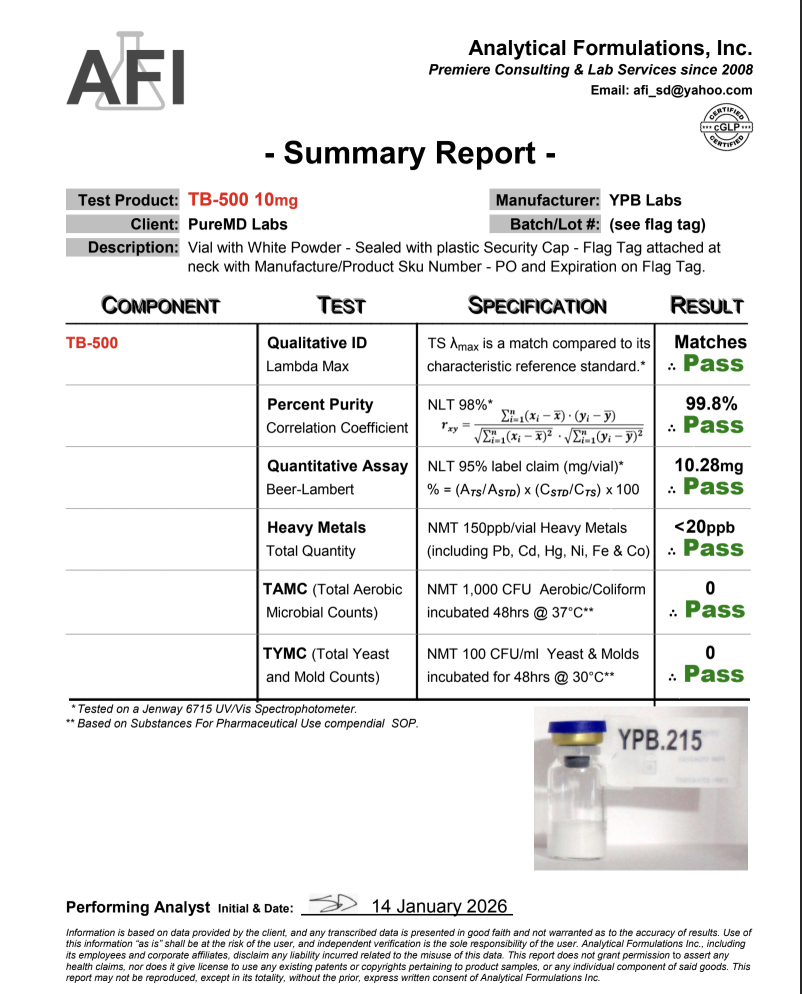
TB-500 (Thymosin Beta-4 Fragment)
TB-500 is a synthetic peptide fragment derived from thymosin beta-4 (Tβ4), a naturally occurring intracellular peptide involved in cytoskeletal organization. In laboratory and preclinical research contexts, TB-500 is used as a research tool to investigate actin dynamics, cell migration, and tissue remodeling–related signaling pathways.
In experimental systems, TB-500 has been explored for its role in regulatory processes associated with cellular movement and structural adaptation, particularly in models examining cytoskeletal reorganization and intercellular communication. Its relatively small size and defined structure make it suitable for controlled in vitro studies and animal research models focused on mechanistic biology.
Rather than interacting with a single receptor, TB-500 has been studied for its intracellular activity, including binding to monomeric actin (G-actin) and influencing downstream signaling networks associated with cellular motility and organization. These characteristics have positioned TB-500 as a compound of interest in preclinical research on coordinated cellular responses to structural and environmental cues.
Peptide Identity and Molecular Profile
| Property | Description |
|---|---|
| Peptide Name | TB-500 |
| Full Name | Thymosin Beta-4 Fragment |
| Peptide Class | Synthetic peptide fragment |
| Amino Acid Length | 17 residues (Tβ4 fragment 17-23 |
| Parent Peptide | Thymosin beta-4 (43-amino-acid fragment) |
| Molecular Weight | ~1638 Da |
| Biological Role (Research Context) | Cytoskeletal and actin-associated signaling |
Chemical and Registry Information
| Property | Value |
|---|---|
| Molecular Formula | Reported in research literature; may vary by salt form |
| CAS Number | Not universally assigned |
| Registry Identifiers | Research designation: TB-500 |
| Synonyms | Thymosin β4 fragment, TB-500 |
| Structural Features | Linear peptide; actin-binding motif present |
Biological Pathways Studied (Preclinical Research)
In laboratory and preclinical research environments, TB-500 has been studied for its interactions with intracellular structural and signaling systems. These investigations focus on cellular mechanisms rather than physiological or clinical outcomes.
| Pathway / System | Research Context |
|---|---|
| Actin Dynamics | Studied for binding to G-actin and cytoskeletal organization |
| Cell Migration Pathways | Explored in models of cellular movement and adhesion |
| Cytoskeletal Remodeling | Investigated in tissue and structural adaptation studies |
| Intracellular Signaling Networks | Examined for coordination of structural and signaling responses |
| Inflammatory Signaling Modulation | Studied in cellular research models (mechanistic focus) |
Research Applications
TB-500 is commonly used in laboratory research involving:
-
Cytoskeletal organization and actin-binding studies
-
Cell migration and adhesion assays
-
Tissue remodeling and structural adaptation models
-
Intracellular peptide signaling investigations
-
Comparative studies of thymosin-derived peptides
All applications are restricted to preclinical, in vitro, or animal research contexts.
Storage and Handling Guidelines
TB-500 should be stored under controlled laboratory conditions in a cool, dry environment and protected from light. Standard laboratory safety and handling procedures for synthetic peptides should be followed to maintain chemical integrity and reproducibility.
Lyophilized Powder
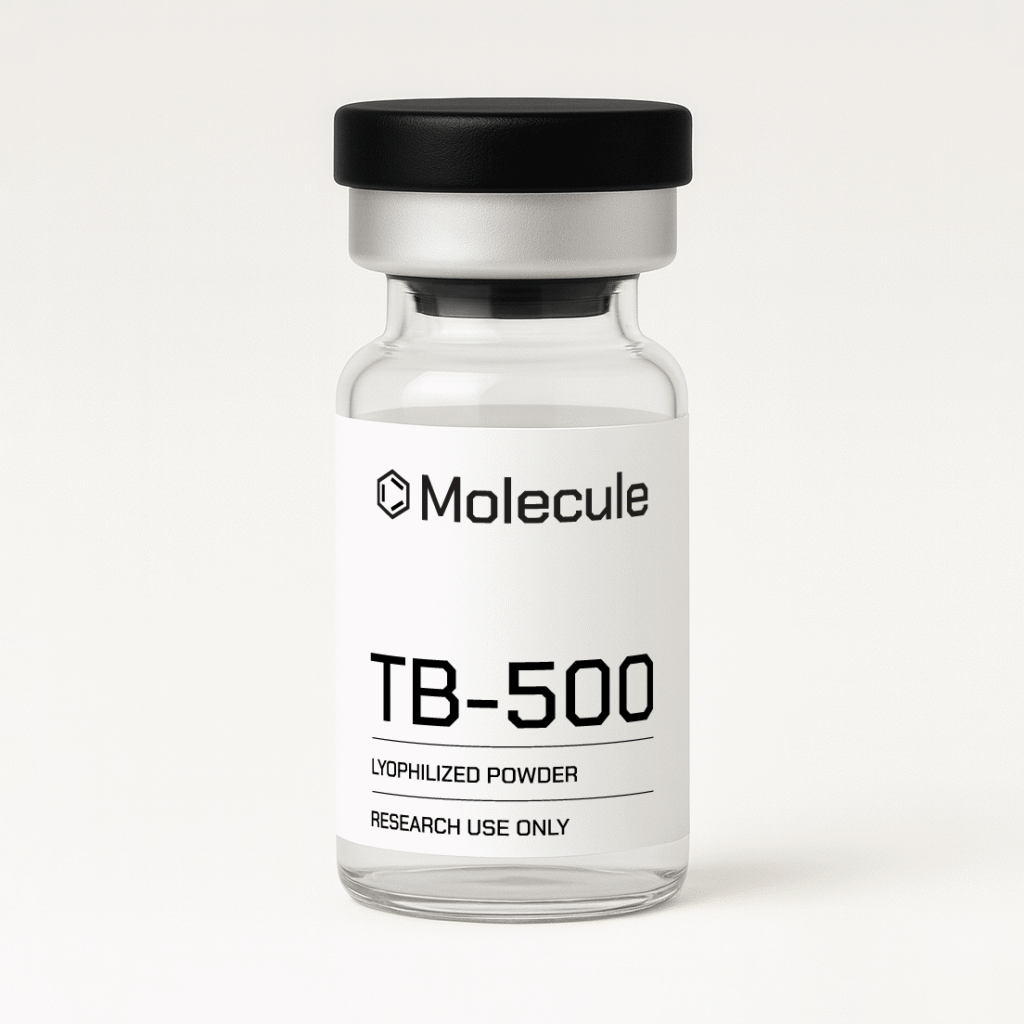
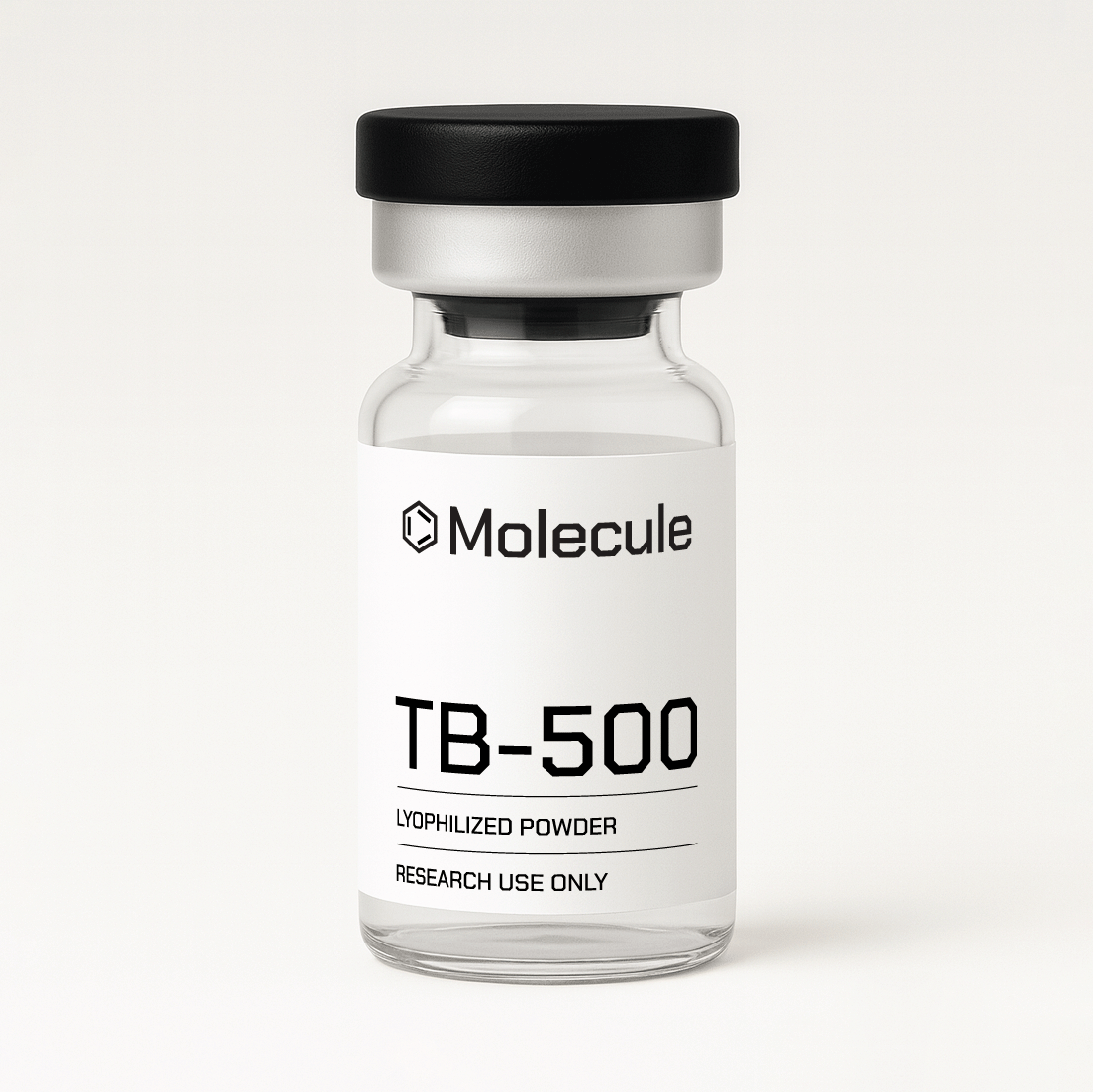
TB-500 is supplied as a lyophilized powder, produced through freeze-drying to remove residual moisture while preserving peptide structure and stability. This format supports long-term storage, precise measurement, and consistent preparation across experimental protocols.
Shelf Life After Reconstitution
Once reconstituted, TB-500 is no longer in its lyophilized form, and stability characteristics depend on buffer composition, temperature, handling practices, and study duration. In research environments, reconstituted peptide material is typically treated as suitable for short-term experimental use, with stability considerations incorporated into experimental planning and data-integrity management. Actual usable time frames vary based on laboratory-specific conditions.