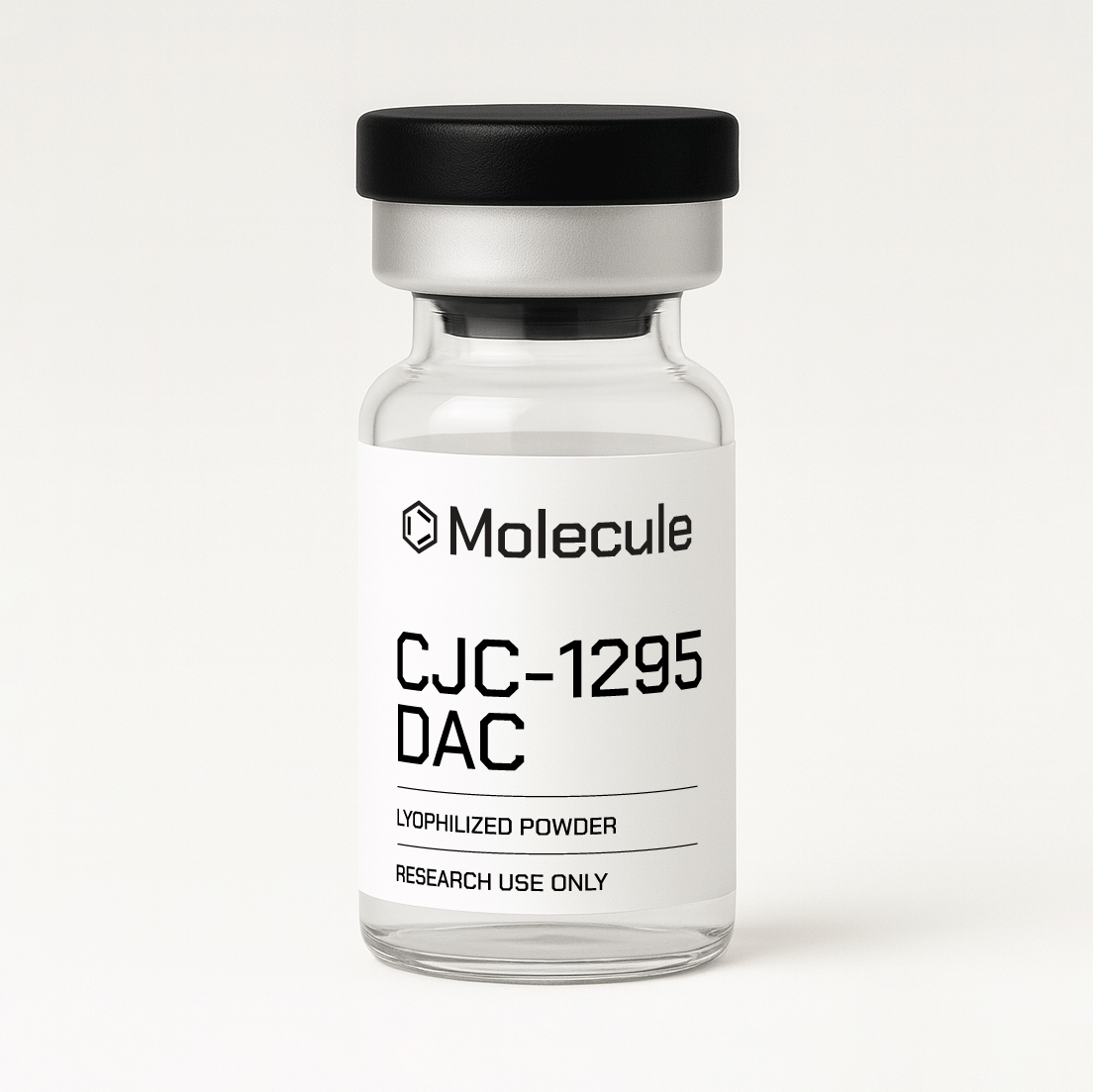
CJC-1295 With DAC

CJC-1295 with DAC is a growth hormone releasing hormone analog that may support growth hormone release and recovery. Available in 5mg size.

$100.00

Size

5mg

Fast processing & shipping

Orders are processed and shipped within 1–2 business days to ensure timely delivery of research materials.

All sales final

Due to the nature of laboratory research materials, all sales are final once shipped. No returns or refunds on delivered items.

Limited refund eligibility

Refunds or replacements are only issued for incorrect, damaged, or undelivered orders. Claims must be submitted within 48 hours with supporting photos.

Description

CJC-1295 DAC (Growth Hormone–Releasing Hormone Analog, Drug Affinity Complex)

CJC-1295 DAC is a synthetic peptide analog of growth hormone–releasing hormone (GHRH) engineered with a Drug Affinity Complex (DAC) to extend its persistence in biological systems through albumin binding. In laboratory and preclinical research contexts, CJC-1295 DAC is utilized as a research tool to investigate neuroendocrine signaling, peptide–protein interactions, and hormone regulation mechanisms.

In experimental models, CJC-1295 DAC has been explored for its interaction with GHRH receptors (GHRHR) and its influence on downstream endocrine signaling pathways. The DAC modification enables researchers to study prolonged peptide–receptor engagement and altered pharmacokinetic profiles compared to native GHRH fragments, making it useful in comparative peptide signaling studies.

Rather than functioning as a native hormone, CJC-1295 DAC is designed to mimic and modulate endogenous peptide signaling within controlled research systems. Its structural modifications and receptor specificity have positioned it as a compound of interest in preclinical investigations focused on hypothalamic–pituitary axis signaling and peptide stabilization strategies.


Peptide Identity and Molecular Profile

Property Description
Peptide Name CJC-1295 DAC
Full Name Growth Hormone–Releasing Hormone Analog with Drug Affinity Complex
Peptide Class Synthetic peptide hormone analog
Amino Acid Length 30 residues (modified GHRH analog)
Structural Modification Drug Affinity Complex (DAC) for albumin binding
Molecular Weight ~3,650 Da (varies by synthesis/salt form)
Biological Target (Research Context) GHRH receptor (GHRHR)

Chemical and Registry Information

Property Value
Molecular Formula Reported in research literature; may vary by salt form
CAS Number 863288-34-0 (reported in research literature)
Registry Identifiers Research designation: CJC-1295 DAC
Synonyms DAC:GHRH(1–29), CJC-1295 with DAC
Structural Features GHRH analog with albumin-binding moiety

Biological Pathways Studied (Preclinical Research)

In laboratory and preclinical research environments, CJC-1295 DAC has been studied for its interactions with neuroendocrine and peptide signaling systems. These investigations focus on molecular signaling mechanisms rather than physiological or clinical outcomes.

Pathway / System Research Context
GHRH Receptor Signaling Studied for receptor activation and downstream signaling
Hypothalamic–Pituitary Axis Explored in endocrine regulation models
cAMP/PKA Pathway Investigated as part of GHRH-mediated signal transduction
Peptide–Albumin Binding Examined for extended peptide persistence
Endocrine Feedback Networks Studied in controlled hormone signaling systems

Research Applications

CJC-1295 DAC is commonly used in laboratory research involving:

  • GHRH receptor signaling studies

  • Neuroendocrine pathway modeling

  • Peptide stabilization and half-life extension research

  • Albumin-binding peptide design investigations

  • Comparative studies of GHRH analogs

All applications are limited to preclinical, in vitro, or animal research settings.


Storage and Handling Guidelines

CJC-1295 DAC should be stored under controlled laboratory conditions in a cool, dry environment and protected from light. Standard laboratory handling procedures for synthetic peptides should be followed to preserve structural integrity and experimental reproducibility.


Lyophilized Powder

CJC-1295 DAC is supplied as a lyophilized powder, produced through freeze-drying to remove residual moisture while maintaining peptide conformation and chemical stability. This format supports accurate reconstitution, precise dosing for experimental design, and long-term storage under appropriate conditions.


Shelf Life After Reconstitution

Once reconstituted, CJC-1295 DAC is no longer in its lyophilized state, and stability characteristics depend on buffer composition, temperature, handling frequency, and study duration. In research environments, reconstituted peptide solutions are generally treated as suitable for short-term experimental use, with stability considerations incorporated into protocol planning and data-integrity assessment. Actual stability may vary based on laboratory-specific conditions.
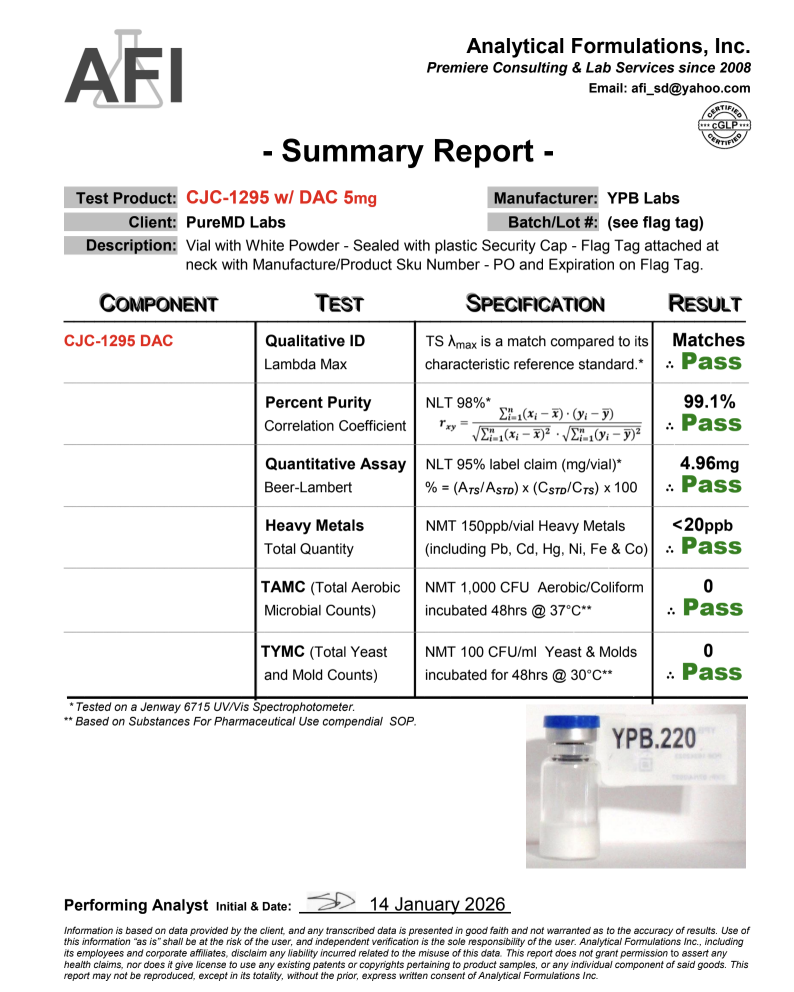
CJC-1295 With DAC Research Overview

CJC-1295 With DAC is a synthetic 29-amino-acid analog of growth hormone-releasing hormone (GHRH 1-29) modified with a Drug Affinity Complex (DAC), which extends its systemic half-life. This peptide is primarily utilized in preclinical and in vitro research to study GHRH receptor activation, cAMP/PKA-mediated signaling, and GH-axis modulation in laboratory models.

The peptide is of scientific interest because the DAC modification allows sustained receptor engagement and prolonged GH release in experimental systems, enabling investigations into temporal patterns of GHRH-mediated signaling and downstream molecular effects. Literature on this peptide is limited to supplier technical documentation and preclinical assay studies, as peer-reviewed mechanistic studies are sparse.


Mechanism of Action in Laboratory Models

CJC-1295 With DAC has been investigated in preclinical research for its long-acting GHRH receptor agonism:

  • GHRH Receptor (GHRH-R) Activation

    • Laboratory studies explore receptor binding and cAMP/PKA intracellular signaling in pituitary somatotroph models.

    • Sustained receptor activation allows experimental modeling of prolonged GH signaling dynamics.

  • DAC-Mediated Half-Life Extension

    • The DAC modification promotes reduced clearance in vitro and in vivo models, allowing studies of longer-term GH-axis modulation relative to non-DAC analogs.

  • Single-Target Activity

    • Mechanistic investigations focus on GHRH-R without documented pleiotropic receptor effects.


Primary Research Findings

Research on CJC-1295 With DAC is primarily preclinical and mechanistic:

  • GH Secretion Dynamics

    • Laboratory models indicate sustained GH release consistent with DAC-mediated prolonged peptide circulation.

  • Comparative Analyses

    • Studied alongside CJC-1295 Without DAC to explore differences in half-life, receptor engagement, and intracellular signaling duration.

  • Metabolic Endpoint Research

    • Used in cellular models of GH-responsive tissues to measure GH-dependent markers, without clinical outcome implications.

Note: Literature is primarily derived from supplier technical documentation and preclinical assay reports; peer-reviewed mechanistic studies are limited.


Research Applications

Endocrine and GH-Axis Research

  • Investigates long-acting GHRH-R signaling, sustained cAMP/PKA activation, and prolonged GH secretion patterns.

  • Experimental endpoints include receptor activation assays, GH quantification, and downstream pathway analyses.

Comparative Peptide Research

  • Applied in studies comparing short- vs. long-acting GHRH analogs.

  • Supports experimental exploration of pharmacokinetic effects on GH-axis modulation.

Metabolic Research

  • Utilized in in vitro hepatocyte and adipocyte models to investigate GH-related intracellular signaling and temporal hormone dynamics.


Research Handling and Format

  • Lyophilized Powder: Freeze-dried to maintain peptide stability and reproducibility.

  • Storage: Keep in a cool, dry, and light-protected environment.

  • Reconstitution: Stability post-reconstitution is short-term; conditions may vary across laboratories.

  • Research Use Only: Intended solely for preclinical and in vitro research; not for human consumption or clinical use.


Peptide Identity and Molecular Profile

Property Description
Peptide Name CJC-1295 With DAC
Peptide Class Synthetic GHRH analog, long-acting (DAC-modified)
Amino Acid Sequence 29-residue modified GHRH 1-29 analog with DAC linkage (sequence documented by suppliers)
Amino Acid Length 29 residues
Molecular Weight ~4,535–4,560 Da (approximate, including DAC)
Molecular Formula C₁₅₂H₂₄₈N₄₄O₄₂S + DAC modification (approximate)
Research Role Preclinical investigation of prolonged GHRH-R signaling and GH-axis dynamics

References

  • Literature on CJC-1295 With DAC is primarily preclinical and derived from peptide supplier specifications.

  • Verified references on GHRH receptor signaling and DAC effects:

    • Ho, K. Y., & Veldhuis, J. D. (1995). Mechanisms controlling pulsatile GH secretion in laboratory models. Endocrine Reviews, 16(6), 725–757.

    • Peptide supplier technical datasheets provide sequence, molecular weight, and handling information.

Note: Peer-reviewed mechanistic studies for DAC-modified CJC-1295 are limited; most data originate from preclinical assay reports and manufacturer documentation.

CJC with DAC

Related products

Disclaimer: For Research Purposes Only

The owner of this website has made a commitment to accessibility and inclusion, please report any problems that you encounter using the contact form on this website. This site uses the WP ADA Compliance Check plugin to enhance accessibility.
0
    0
    Your Cart
    Your cart is emptyReturn to Shop