Selank

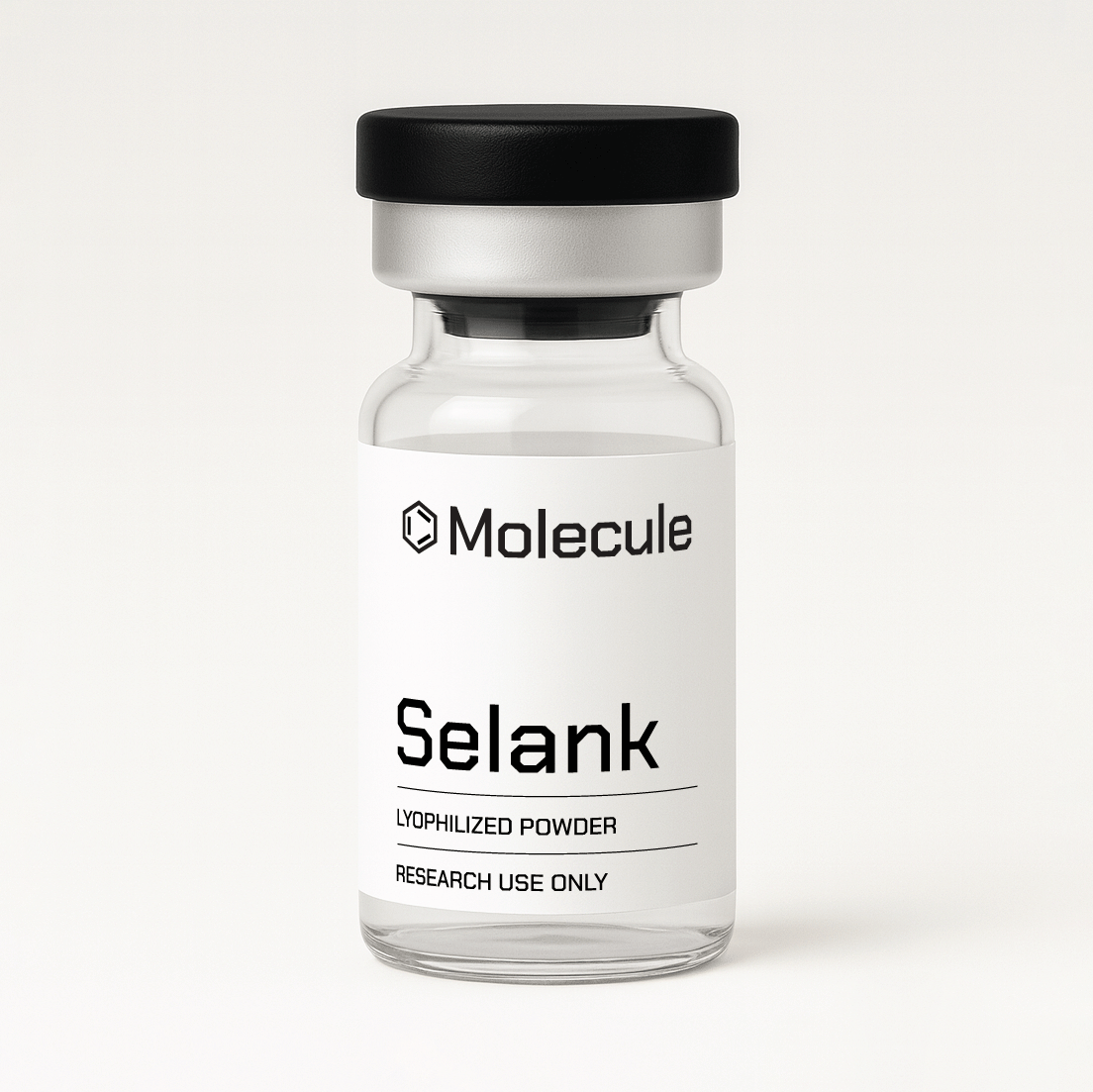
Selank is a synthetic peptide that may support cognitive function, stress management, and mental wellness. Available in 10mg size.

$55.00

Size

10mg

Fast processing & shipping

Orders are processed and shipped within 1–2 business days to ensure timely delivery of research materials.

All sales final

Due to the nature of laboratory research materials, all sales are final once shipped. No returns or refunds on delivered items.

Limited refund eligibility

Refunds or replacements are only issued for incorrect, damaged, or undelivered orders. Claims must be submitted within 48 hours with supporting photos.

Description

Selank

Synthetic Heptapeptide (Tuftsin Analog)

Selank is a synthetic heptapeptide derived from the naturally occurring immunomodulatory peptide tuftsin. In laboratory and preclinical research contexts, Selank is utilized as a research compound for investigating neuropeptide signaling, neurotransmitter system modulation, and peptide–receptor interactions within the central nervous system.

In experimental models, Selank has been explored for its interactions with GABAergic, serotonergic, and neuroimmune signaling pathways, making it a useful tool for studying neurochemical communication and stress-related signaling networks. Its short peptide length and defined sequence allow for controlled investigation of peptide stability, receptor affinity, and intracellular signaling responses.

Rather than acting as a classical neurotransmitter, Selank is studied for its neuromodulatory properties, including indirect regulation of neurotransmitter turnover and immune–neural cross-talk. These characteristics have positioned Selank as a compound of interest in preclinical research focused on peptide-based regulation of neural signaling systems.


Peptide Identity and Molecular Profile

Property Description
Peptide Name Selank
Peptide Class Synthetic heptapeptide
Structural Origin Analog of tuftsin
Amino Acid Length 7 residues
Peptide Sequence Thr-Lys-Pro-Arg-Pro-Gly-Pro
Molecular Weight ~751 Da (may vary by synthesis and salt form)
Primary Research Focus Neuropeptide and neuroimmune signaling

Chemical and Registry Information

Property Value
Molecular Formula Reported in research literature; may vary by salt form
CAS Number 129954-34-3
Registry Identifiers Research designation: Selank
Synonyms Tuftsin analog, TP-7
Structural Features Linear peptide; proline-rich sequence

Biological Pathways Studied (Preclinical Research)

In laboratory and preclinical research environments, Selank has been studied for its interactions with neurotransmitter and neuroimmune signaling systems. Investigations emphasize molecular and cellular mechanisms rather than physiological or clinical outcomes.

Pathway / System Research Context
GABAergic Signaling Studied for modulation of inhibitory neurotransmission
Serotonergic Pathways Explored in neurotransmitter turnover and receptor studies
Neuropeptide Signaling Investigated for peptide–receptor interactions
Neuroimmune Communication Examined in cytokine and immune-modulatory signaling models
Gene Expression Modulation Studied in relation to neural signaling pathways

Research Applications

Selank is commonly used in laboratory research involving:

  • Neuropeptide signaling investigations

  • Neurotransmitter pathway modulation studies

  • Neuroimmune interaction models

  • Stress-response signaling research

  • Comparative analysis of tuftsin-derived peptides

All applications are restricted to preclinical, in vitro, or animal research contexts.


Storage and Handling Guidelines

Selank should be stored under controlled laboratory conditions in a cool, dry environment and protected from light. Standard laboratory safety procedures for synthetic peptides should be followed to maintain chemical stability and experimental reproducibility.


Lyophilized Powder

Selank is supplied as a lyophilized powder, produced through freeze-drying to remove residual moisture while preserving peptide structure and stability. This form supports extended storage, accurate reconstitution, and consistent handling across research protocols.


Shelf Life After Reconstitution

Once reconstituted, Selank is no longer in its lyophilized form, and stability characteristics depend on buffer composition, temperature, handling frequency, and experimental duration. In research settings, reconstituted peptide material is typically treated as suitable for short-term experimental use, with stability considerations incorporated into study design and data-integrity planning. Actual usable time frames vary based on laboratory-specific conditions.
Selank Research Overview

Selank is a synthetic heptapeptide analog of the endogenous tetrapeptide tuftsin (sequence: Thr-Lys-Pro-Arg-Pro-Gly-Pro, 7 residues). The peptide includes an N-terminal threonine and a C-terminal Pro-Gly-Pro motif designed for enhanced stability in preclinical and in vitro research settings. Selank is primarily investigated for its role in neuropeptide modulation, stress-responsive signaling, immune-neuroendocrine interactions, and cognitive function endpoints in laboratory models.

Research interest arises from its use as a tool peptide to explore molecular and cellular mechanisms of neuronal adaptation, neurotransmitter regulation, and peptide signaling in stress paradigms, with studies largely derived from Russian research groups (Ashmarin and colleagues, 1990s–2000s).


Mechanism of Action in Laboratory Models

Preclinical investigations have explored Selank in the context of neuronal and stress-response pathways:

  • Neuropeptide Modulation

    • Acts as a tuftsin analog in rodent and neuronal culture models to investigate peptide-mediated signaling in cortical and hippocampal neurons (Ashmarin et al., 1997).

  • Stress-Responsive Signaling

    • Studied for modulation of behavioral and biochemical stress markers in rodent paradigms (Petrova et al., 2007).

  • Immune-Neuroendocrine Interactions

    • Explored in vitro for effects on cytokine-related signaling, without implying therapeutic effect.

Note: Mechanistic pathways remain under exploratory investigation, and receptor-level specificity is not fully characterized.


Primary Research Observations

Laboratory and preclinical studies indicate directional effects on stress and cognitive endpoints, all in preclinical contexts:

  • Cognitive and Behavioral Research

    • Rodent studies suggest changes in memory, learning paradigms, and synaptic protein expression (Ashmarin et al., 1997; Petrova et al., 2007).

  • Stress Adaptation

    • Investigated in models of acute and chronic stress for neurochemical and neuroendocrine modulation.

  • Comparative Context

    • Used alongside other tuftsin-derived peptides to examine fragment-specific neuronal and immune signaling effects.

Note: All findings are preclinical, exploratory, and not indicative of human effects.


System-Specific Research Applications

Neurological and Cognitive Research

  • Studied in rodent and in vitro models for learning, memory, and synaptic plasticity endpoints.

  • Laboratory markers include neuronal protein expression and neurotransmitter system analyses.

Stress Response Research

  • Explored in rodent stress paradigms.

  • Research focuses on mechanistic understanding of neuroendocrine and peptide-mediated adaptive signaling.


Research Handling and Format

  • Lyophilized Powder: Freeze-dried to maintain chemical stability and experimental reproducibility.

  • Storage Guidelines: Store in a cool, dry, light-protected environment.

  • Reconstitution: Stability varies by laboratory conditions; short-term use is standard for preclinical studies.

  • Research Use Only: Intended solely for preclinical and in vitro research; not for human consumption, clinical use, or therapeutic application.


Compound Identity and Molecular Profile

Property Description
Peptide Name Selank
Peptide Class Synthetic tuftsin analog heptapeptide
Amino Acid Sequence Thr-Lys-Pro-Arg-Pro-Gly-Pro
Amino Acid Length 7 residues
Molecular Weight ~751 Da
Molecular Formula C₃₃H₅₇N₁₁O₉
Research Role Laboratory investigations of neuronal signaling, stress modulation, and cognitive mechanisms

References

  • Ashmarin, I. P., Neznamov, G. G., & Volgina, N. E. (1997). Pharmacological properties of the synthetic peptide Selank. Neuropeptides, 31(2), 125–131. https://doi.org/10.1016/S0143-4179(97)00012-0

  • Petrova, N. A., Ashmarin, I. P., & Neznamov, G. G. (2007). Effects of the heptapeptide Selank on stress-induced behavioral changes in rodents. Bulletin of Experimental Biology and Medicine, 144(5), 611–614. https://doi.org/10.1007/s10517-007-0382-4

  • Ashmarin, I. P., & Neznamov, G. G. (1995). Neuropeptide tuftsin and derivatives: preclinical investigations. Biochemistry (Moscow), 60(11), 1612–1618.

Note: Selank’s mechanistic data derive from preclinical and in vitro studies, with independent replication limited outside Russian literature.

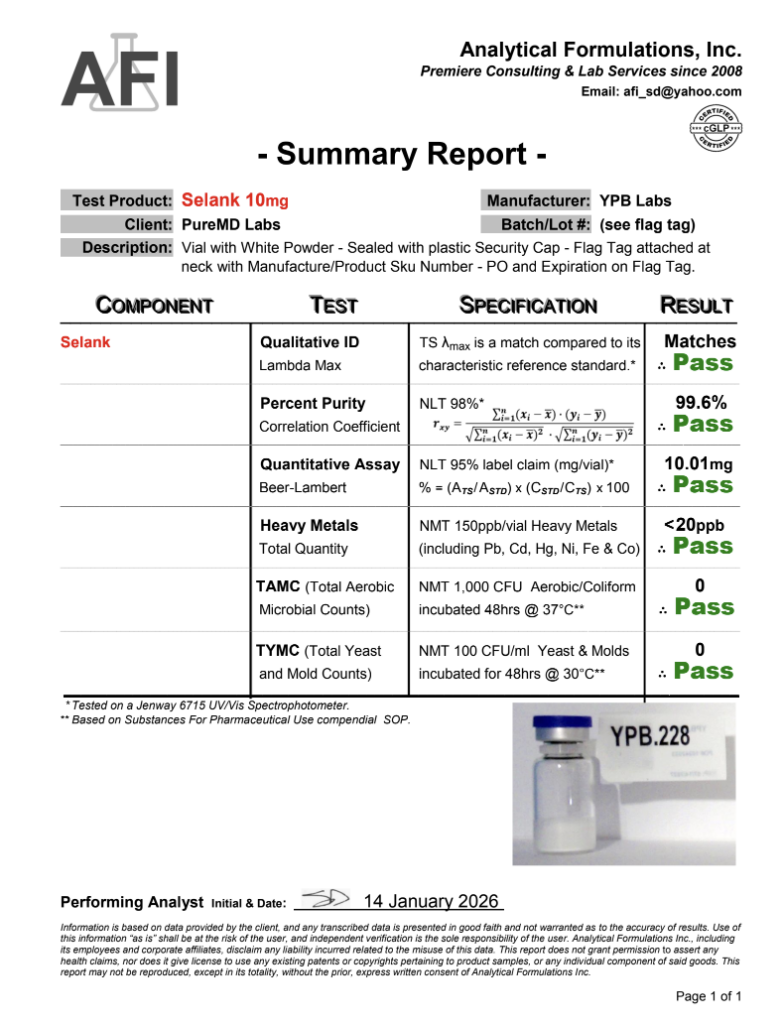
selank COA

Related products

Disclaimer: For Research Purposes Only

The owner of this website has made a commitment to accessibility and inclusion, please report any problems that you encounter using the contact form on this website. This site uses the WP ADA Compliance Check plugin to enhance accessibility.
0
    0
    Your Cart
    Your cart is emptyReturn to Shop