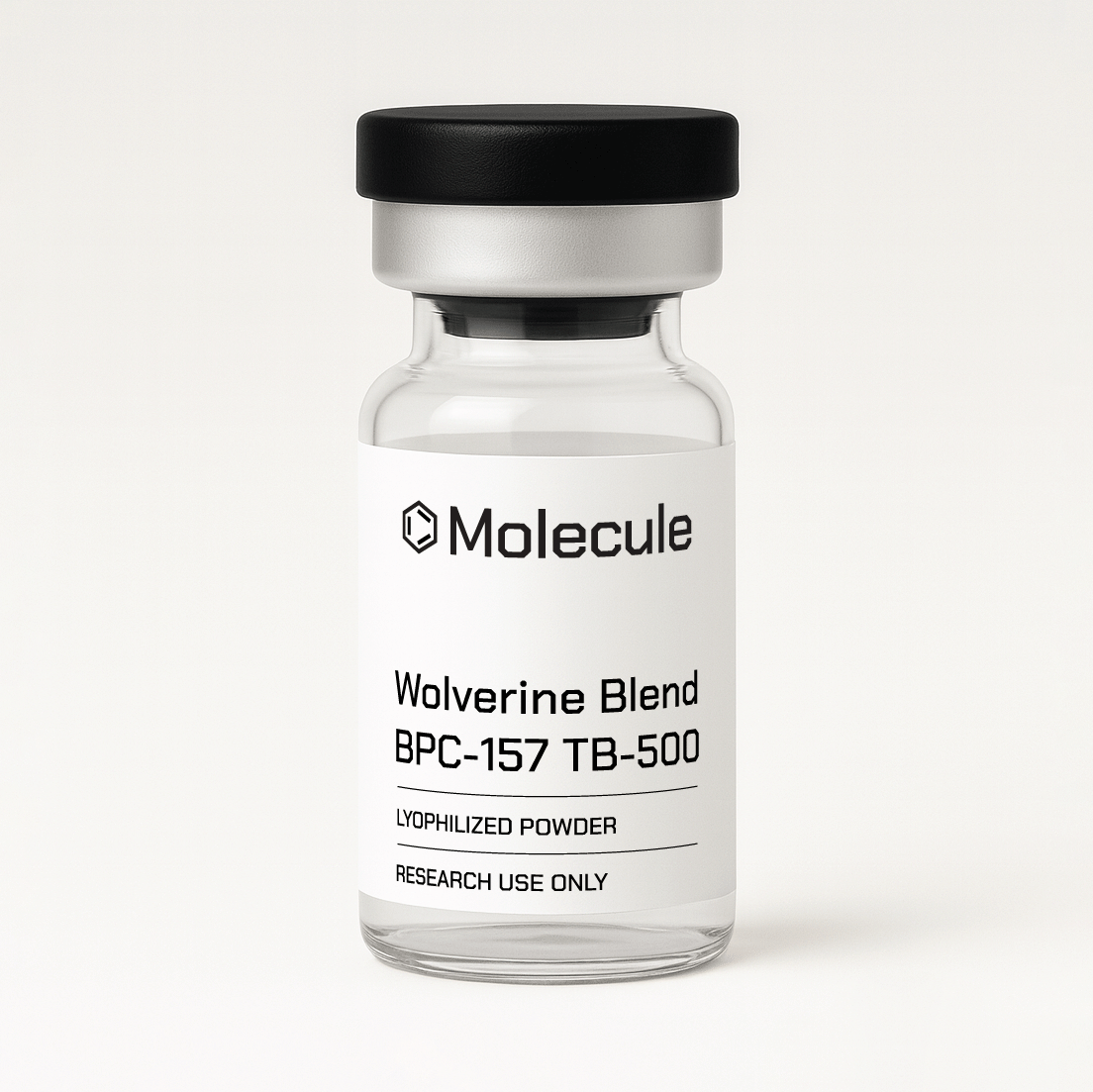
Wolverine Blend

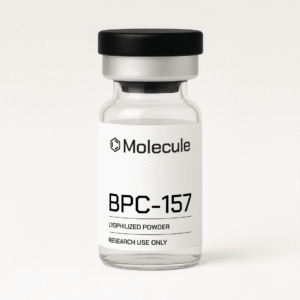
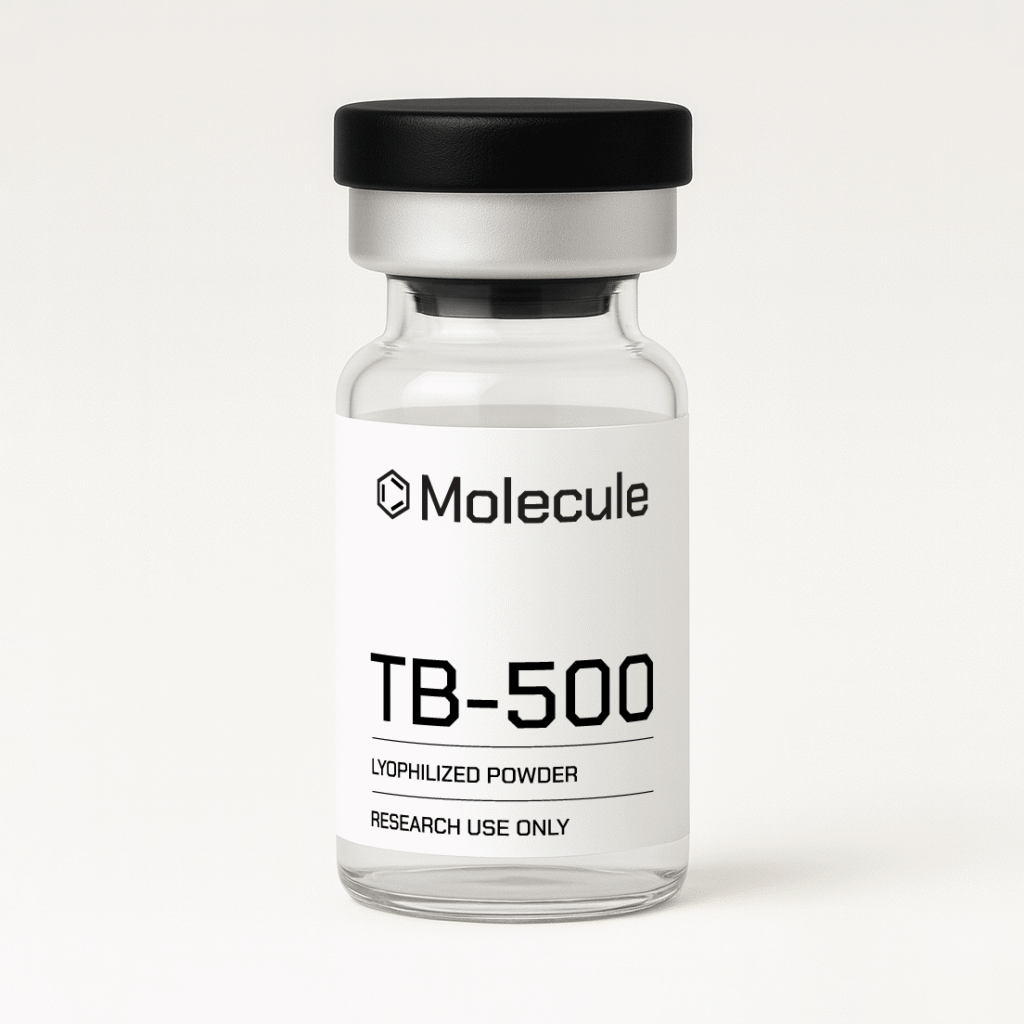
Wolverine Blend combines BPC-157 and TB-500 peptides to support tissue repair, recovery, and healing.

Price range: $100.00 through $180.00

Size

Fast processing & shipping

Orders are processed and shipped within 1–2 business days to ensure timely delivery of research materials.

All sales final

Due to the nature of laboratory research materials, all sales are final once shipped. No returns or refunds on delivered items.

Limited refund eligibility

Refunds or replacements are only issued for incorrect, damaged, or undelivered orders. Claims must be submitted within 48 hours with supporting photos.

Description

Wolverine Blend

Synthetic Peptide Research Tool

Wolverine Blend is a synthetic peptide formulation with BPC-157 and TB-500 used in laboratory and preclinical research to investigate cell signaling, tissue remodeling, and cellular adaptation mechanisms. Research primarily explores its interactions with growth factor pathways, metabolic regulatory networks, and extracellular matrix signaling, without implying therapeutic or clinical outcomes.

Preclinical studies focus on Wolverine Blend’s role in cellular proliferation, structural protein modulation, and regulatory signaling pathways in in vitro and controlled laboratory models. Investigations are oriented toward mechanistic understanding at the molecular and cellular levels.


Peptide Identity and Molecular Profile

See BPC-157 and TB-500 components

Chemical and Registry Information

See BPC-157 and TB-500 components

Biological Pathways Studied (Preclinical Research)

In laboratory and preclinical research, Wolverine Blend has been studied for interactions with cellular and molecular signaling systems:

Pathway / System Research Context
Growth Factor Signaling Investigated in relation to IGF, FGF, and VEGF pathways
Peptide Hormone Receptors Studied in vitro for modulation of GPCRs and receptor-mediated signaling
Extracellular Matrix Regulation Explored for effects on collagen, elastin, and matrix remodeling enzymes
Cellular Stress Response Examined in oxidative stress and antioxidant pathway studies
Metabolic and Energy Pathways Investigated for roles in intracellular energy sensing and metabolic adaptation

Research Applications

Wolverine Blend is commonly used in laboratory research, including:

  • Preclinical cell proliferation and tissue remodeling studies

  • In vitro growth factor and receptor signaling investigations

  • Laboratory models of extracellular matrix regulation

  • Studies of oxidative stress and cellular adaptation mechanisms

  • Research into metabolic and energy regulatory networks

Note: Wolverine Blend is intended solely for preclinical research and in vitro studies. It is not for human, veterinary, diagnostic, or therapeutic use.


Storage and Handling Guidelines

Store Wolverine Blend in a cool, dry environment, protected from light. Maintain standard laboratory conditions to preserve peptide stability. Handle all research peptides using institutional laboratory safety protocols.


Lyophilized Powder

Wolverine Blend is supplied as a lyophilized powder, which removes residual moisture while maintaining peptide integrity. This format supports accurate quantification and reproducibility in preclinical research.


Shelf Life After Reconstitution

Once reconstituted, Wolverine Blend should be considered for short-term laboratory use. Stability may vary depending on solvent, temperature, and handling conditions. Researchers should incorporate post-reconstitution stability into experimental planning and data integrity considerations.


Compliance Notice

Wolverine Blend is provided exclusively for laboratory and preclinical research purposes. It is not intended for human, veterinary, therapeutic, or diagnostic use. All handling must comply with institutional and regulatory safety guidelines.

Wolverine Blend Research Overview

Wolverine Blend is a research peptide combination composed of TB-500 and BPC-157, investigated in preclinical and in vitro models for extracellular matrix regulation, angiogenic signaling, and cytoskeletal modulation. The blend is primarily of interest to researchers exploring coordinated peptide interactions in tissue and cellular models.

Laboratory studies focus on mechanistic investigations of each component and their combined effects in controlled experimental systems. Wolverine Blend is utilized as a research tool to examine cell migration, tissue modeling, and vascular signaling, without implying clinical or therapeutic outcomes.


Mechanism of Action in Laboratory Models

The components of Wolverine Blend have been explored individually in preclinical research:

  • BPC-157

    • Investigated for angiogenic signaling, endothelial cell migration, and vascular network formation in vitro (Sikiric et al., 2012).

    • Studied for interactions with growth factor pathways and cytoprotection mechanisms in tissue models.

  • TB-500

    • Explored for actin cytoskeletal remodeling and cell motility in laboratory and animal studies (Huff et al., 2013).

    • Used to study tissue structure modulation and ECM dynamics in preclinical research.

  • Combined Investigations

    • Wolverine Blend is studied in experimental systems to examine potential additive or synergistic effects on ECM and cytoskeletal pathways, with endpoints including cell migration assays, structural protein expression, and angiogenic modeling.


Primary Research Findings

Preclinical and in vitro studies have reported the following component-specific mechanistic observations:

  • Extracellular Matrix and Tissue Modeling

    • BPC-157 has been studied for collagen stabilization and modulation of fibroblast function (Sikiric et al., 2012).

    • TB-500 research indicates actin filament reorganization supporting cell motility (Huff et al., 2013).

  • Vascular and Angiogenic Research

    • BPC-157 has been explored for endothelial cell proliferation, tube formation, and vascular network development in laboratory models (Sikiric et al., 2012).

  • Cytoskeletal Dynamics

    • TB-500 studies focus on actin cytoskeleton remodeling, facilitating cell migration and tissue modeling in preclinical systems (Huff et al., 2013).

  • Combined Effects

    • Laboratory models may examine interactions between TB-500 and BPC-157, particularly for studies of coordinated ECM regulation and vascular signaling, without implying verified efficacy in vivo.


Research Applications

Tissue Remodeling and Regenerative Research

  • Investigations of fibroblast migration, collagen deposition, and tissue scaffolding.

  • Laboratory endpoints include protein expression assays, ECM quantification, and structural modeling.

Angiogenesis and Endothelial Modeling

  • BPC-157 component research examines endothelial cell behavior and angiogenic network formation.

  • Observed endpoints include tube formation, proliferation, and migration assays.

Cytoskeletal and Cellular Dynamics

  • TB-500 component studies focus on actin filament regulation, cytoskeletal integrity, and cell motility.

  • Laboratory markers include structural protein analysis and motility measurements.


Comparative Research Context

Wolverine Blend is primarily utilized as a research tool for exploring combined peptide interactions. Preclinical studies often compare the blend to individual TB-500 or BPC-157 treatments to assess mechanistic overlaps, additive effects, or pathway engagement, without implying therapeutic superiority.


Research Handling and Format

  • Lyophilized Powder – Provided in freeze-dried form to maintain stability, solubility, and reproducibility in laboratory studies.

  • Storage Guidelines – Store in a cool, dry environment, protected from light. Post-reconstitution stability may vary depending on experimental conditions.

  • Laboratory Considerations – Standard peptide-handling protocols should be observed to ensure experimental integrity and reproducibility.


Research Use Only Disclaimer

This compound is intended solely for laboratory research purposes. It is not for human consumption, clinical use, therapeutic application, or veterinary use.


References

  • Sikiric, P., et al. (2012). Stable gastric pentadecapeptide BPC 157: focus on ulcerative colitis and wound healing in experimental models. Current Medicinal Chemistry, 19(1), 126–132. https://doi.org/10.2174/092986712803414015

  • Huff, T., Müller, C. S., Otto, A. M., Netzker, R., & Hannappel, E. (2013). Thymosin beta 4: structure, function, and biological activity in cell culture models. Cell Motility and the Cytoskeleton, 70(10), 709–724. https://doi.org/10.1002/cm.21122

Wolverine Blend COA

Related products

Disclaimer: For Research Purposes Only

The owner of this website has made a commitment to accessibility and inclusion, please report any problems that you encounter using the contact form on this website. This site uses the WP ADA Compliance Check plugin to enhance accessibility.
0
    0
    Your Cart
    Your cart is emptyReturn to Shop