Description
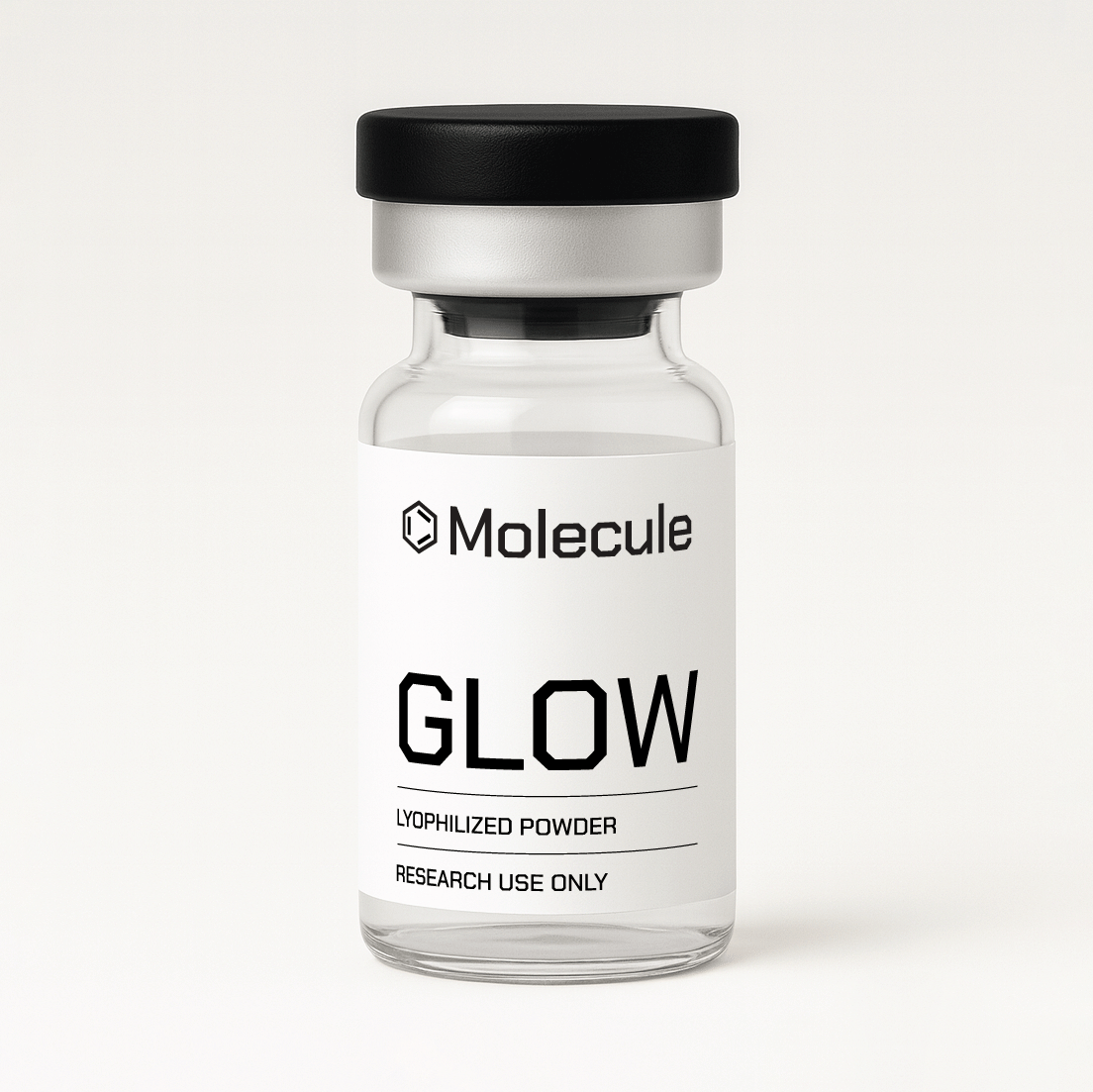
GLOW
Synthetic Peptide Research Tool
GLOW is a proprietary blend of BPC‑157, TB‑500, and GHK‑Cu formulated for research use and studied in laboratory and preclinical research as a tool for investigating cellular signaling, extracellular matrix regulation, and bioactive peptide interactions. Research primarily explores its role in cellular communication networks, peptide-mediated signaling, and gene expression modulation, without implying therapeutic or clinical outcomes.
Preclinical studies focus on GLOW’s involvement in cellular proliferation, metabolic signaling, and regulatory pathways associated with oxidative stress and tissue homeostasis. Investigations are typically performed in in vitro models and controlled laboratory assays.
Peptide Identity and Molecular Profile
Chemical and Registry Information
Biological Pathways Studied (Preclinical Research)
In preclinical research, GLOW has been studied for interactions with molecular and cellular signaling systems:
| Pathway / System | Research Context |
|---|---|
| Extracellular Matrix Regulation | Investigated in relation to collagen, elastin, and matrix-modifying enzymes |
| Peptide Receptor Signaling | Studied in vitro for modulation of GPCRs and peptide hormone receptor pathways |
| Cellular Stress Response | Explored for roles in oxidative stress, antioxidant signaling, and gene expression networks |
| Tissue Homeostasis | Examined in fibroblast and epithelial models for regulation of cellular proliferation and structural integrity |
| Metabolic Signaling | Investigated for involvement in intracellular energy-sensing and metabolic regulatory pathways |
Research Applications
GLOW is commonly used in laboratory research, including:
-
Preclinical extracellular matrix and structural protein studies
-
In vitro peptide-receptor signaling investigations
-
Studies of cellular stress response and antioxidant pathways
-
Laboratory models of tissue homeostasis and cellular proliferation
-
Research into metabolic signaling networks
Note: GLOW is intended solely for preclinical research and in vitro studies. It is not for human, veterinary, diagnostic, or therapeutic use.
Storage and Handling Guidelines
Store GLOW in a cool, dry environment, protected from light. Maintain standard laboratory conditions to preserve peptide stability. Handle all research peptides using institutional laboratory safety protocols.
Lyophilized Powder
GLOW is supplied as a lyophilized powder, which reduces residual moisture and maintains peptide conformation for reliable experimental reproducibility. Lyophilization ensures consistent peptide concentration and handling in preclinical research.
Shelf Life After Reconstitution
Once reconstituted, GLOW should be considered for short-term laboratory use. Stability may vary depending on solvent, temperature, and handling conditions. Researchers should incorporate post-reconstitution stability into experimental planning to maintain data integrity.
Compliance Notice
GLOW is provided exclusively for laboratory and preclinical research purposes. It is not intended for human, veterinary, therapeutic, or diagnostic use. All handling must comply with institutional and regulatory safety guidelines.