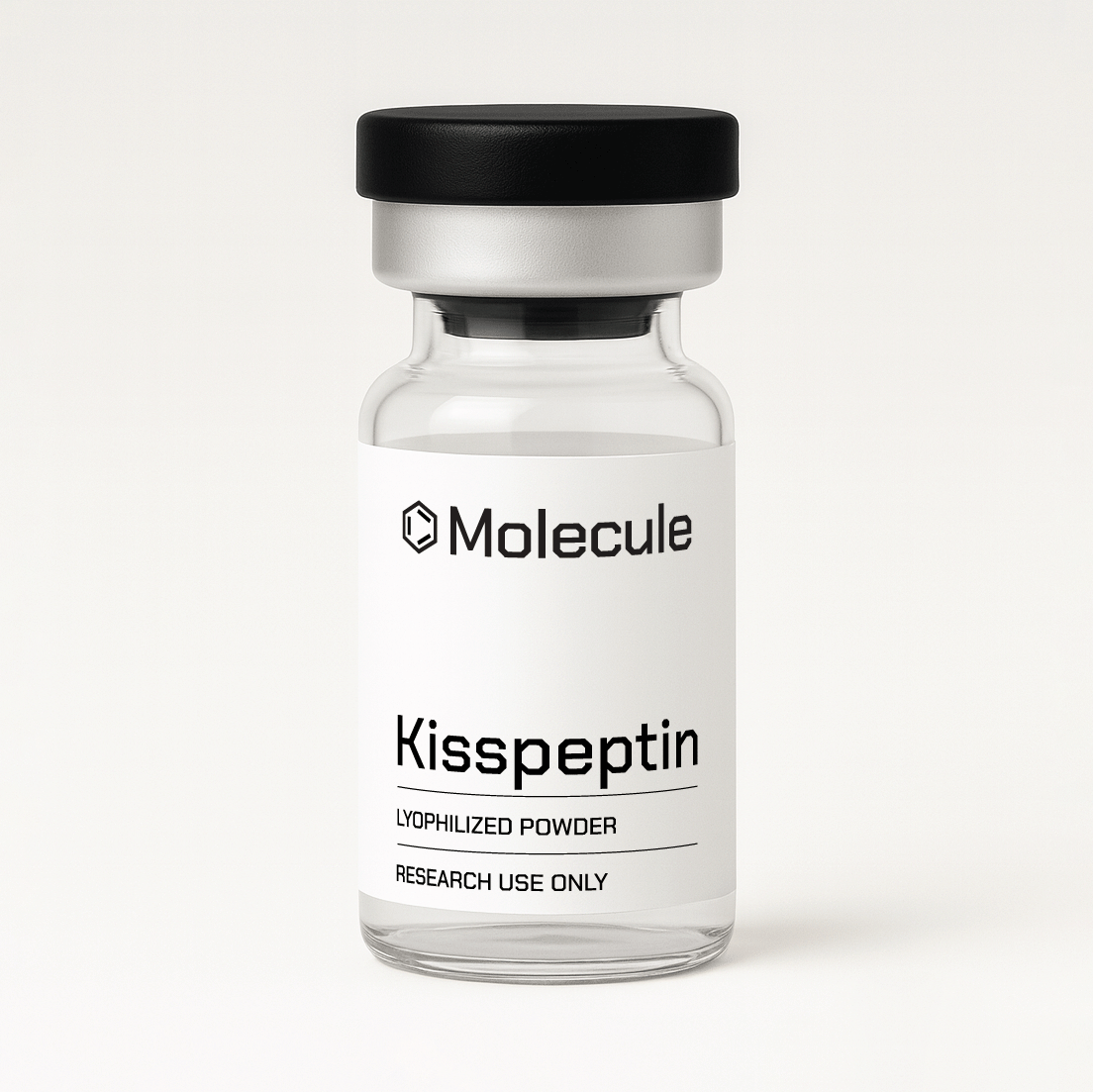
KissPeptin

Kisspeptin is a peptide hormone that may support reproductive health and hormonal balance. Available in 10mg size.

$67.00

Size

10mg

Fast processing & shipping

Orders are processed and shipped within 1–2 business days to ensure timely delivery of research materials.

All sales final

Due to the nature of laboratory research materials, all sales are final once shipped. No returns or refunds on delivered items.

Limited refund eligibility

Refunds or replacements are only issued for incorrect, damaged, or undelivered orders. Claims must be submitted within 48 hours with supporting photos.

Description

KissPeptin (Kisspeptin)

Synthetic Peptide Research Tool

Kisspeptin is a synthetic peptide derived from the KISS1 gene, widely utilized in laboratory and preclinical research to study neuroendocrine signaling and reproductive axis regulation. It functions as a ligand for the G-protein coupled receptor GPR54 (KISS1R), enabling exploration of downstream signaling pathways in cellular and animal models.

Kisspeptin research focuses on mechanistic investigation of peptide-receptor interactions, hormonal regulatory networks, and neuroendocrine communication, rather than clinical or therapeutic outcomes. Preclinical studies have examined its role in reproductive hormone modulation, hypothalamic-pituitary signaling, and associated intracellular pathways.


Peptide Identity and Molecular Profile

Property Description
Peptide Name Kisspeptin-10 / Kisspeptin-54 (varies by isoform)
Peptide Class Synthetic neuropeptide
Amino Acid Length 10–54 residues (isoform-dependent)
Peptide Sequence Kisspeptin-10: Tyr-Asn-Trp-Asn-Ser-Phe-Gly-Leu-Arg-Phe
Molecular Weight ~1,500–6,400 Da (isoform-dependent)
Biological Origin Encoded by the KISS1 gene, naturally expressed in hypothalamic neurons

Chemical and Registry Information

Property Value
Molecular Formula Reported in research literature; varies by isoform and salt form
CAS Number 129906-86-3 (Kisspeptin-10)
PubChem CID 16132947
Synonyms Kisspeptin, metastin, KISS1 peptide, KP-10, KP-54
Source Notes Synthetic, laboratory-grade, research-use peptide

Biological Pathways Studied (Preclinical Research)

In preclinical research, Kisspeptin has been explored for its effects on cellular signaling, hormonal networks, and reproductive axis regulation, with a focus on molecular and mechanistic outcomes:

Pathway / System Research Context
GPR54/KISS1R Signaling Investigated as a primary ligand for the KISS1 receptor (GPCR-mediated intracellular pathways)
Hypothalamic-Pituitary-Gonadal (HPG) Axis Studied in preclinical models to explore gonadotropin-releasing hormone (GnRH) modulation and downstream LH/FSH signaling
Intracellular Calcium Signaling Explored for roles in GPCR-mediated Ca²⁺ mobilization and second messenger cascades
Reproductive Hormone Regulation Examined in vitro and in vivo for effects on gonadotropin secretion dynamics
Neuroendocrine Network Interactions Studied in relation to hypothalamic neuron communication and regulatory feedback loops

Research Applications

Kisspeptin is commonly employed in laboratory research for:

  • Studying GnRH release mechanisms in hypothalamic models

  • Investigating GPR54-mediated intracellular signaling

  • Preclinical exploration of reproductive hormone regulatory networks

  • Neuroendocrine and hypothalamic cell culture studies

  • Comparative analyses of peptide isoform signaling dynamics

Note: All applications are restricted to preclinical, in vitro, or animal research. Kisspeptin is not intended for therapeutic, diagnostic, or clinical use.


Storage and Handling Guidelines

Store Kisspeptin in a cool, dry environment, protected from light. Maintain standard laboratory storage and handling practices to preserve peptide stability. Handle all peptides under institutional safety protocols.


Lyophilized Powder

Kisspeptin is provided as a lyophilized powder, produced via freeze-drying to remove residual moisture while maintaining peptide conformation and chemical stability. Lyophilized peptide supports accurate quantification and reproducibility in controlled laboratory experiments.


Shelf Life After Reconstitution

Following reconstitution, Kisspeptin is no longer in its dry state, and stability is dependent on storage conditions, solvent choice, temperature, and handling practices. Reconstituted material is generally considered suitable for short-term laboratory use, with planning for stability incorporated into experimental design. Actual usability may vary according to specific research conditions.


Compliance Notice

Kisspeptin is supplied exclusively for laboratory and preclinical research. It is not intended for human, veterinary, therapeutic, or diagnostic use, and purchasers must adhere to all relevant regulatory and safety requirements for research peptides.

Kisspeptin Research Overview

Kisspeptin is a synthetic or naturally derived peptide that functions as a key regulator of the hypothalamic-pituitary-gonadal (HPG) axis in laboratory and preclinical studies. Originally identified as a metastasis suppressor protein fragment (KiSS-1), kisspeptin peptides, including Kisspeptin-10 and Kisspeptin-54, have been investigated in vitro and in animal models for their role in neuroendocrine regulation, reproductive signaling, and cellular communication networks (Oakley et al., 2009; Mead et al., 2007).

Research interest in kisspeptin arises from its central position in GnRH neuron activation, providing a molecular tool to study reproductive axis modulation, hormonal feedback mechanisms, and signaling cascades in neuroendocrine systems. Laboratory investigations also explore kisspeptin’s influence on cell migration and intracellular signaling beyond the reproductive context (Kotani et al., 2001).


Mechanism of Action in Laboratory Models

Kisspeptin has been studied as a ligand for the G-protein coupled receptor GPR54 (also known as KISS1R), which mediates downstream signaling in preclinical and in vitro models:

  • GnRH Neuron Activation – Kisspeptin engages GPR54 on hypothalamic neurons to stimulate GnRH secretion, studied using rodent and primate neuronal cultures (Oakley et al., 2009).

  • Pleiotropic Signaling – Research indicates kisspeptin can modulate multiple intracellular pathways, including PLC/IP3 and calcium mobilization, in neuronal and non-neuronal cell lines (Kotani et al., 2001).

  • Receptor Expression Studies – Kisspeptin-GPR54 interactions are investigated through receptor binding assays, calcium imaging, and transcriptional reporter systems to understand signaling kinetics and receptor selectivity.

  • Non-Reproductive Effects – Laboratory models have explored kisspeptin’s involvement in cell migration, angiogenesis, and tumor biology, primarily in vitro (Mead et al., 2007).


Primary Research Findings

Research findings on kisspeptin focus on its mechanistic role in neuroendocrine and cellular signaling systems:

  • GnRH Activation – Rodent and primate models demonstrate kisspeptin stimulates pulsatile GnRH release, confirming its role in reproductive axis regulation (Oakley et al., 2009).

  • Pubertal Onset Models – In juvenile rodent studies, kisspeptin signaling has been investigated for initiating hypothalamic GnRH activity, supporting its use as a research tool in developmental neuroendocrinology (Plant et al., 2006).

  • Cell Migration and Metastasis Research – In vitro experiments indicate kisspeptin peptides may modulate cytoskeletal dynamics and chemotaxis pathways in tumor-derived cell lines, allowing study of metastasis-related signaling (Mead et al., 2007).

  • Receptor Dynamics – Laboratory studies show dose-dependent activation of GPR54, with downstream calcium signaling and IP3-mediated responses observed in cultured neuronal and HEK293 cells (Kotani et al., 2001).

Comparative research has examined kisspeptin alongside other neuropeptides regulating GnRH neurons, such as neurokinin B and dynorphin, to explore coordinated regulation of hypothalamic networks (Oakley et al., 2009).


System-Specific Research Applications

Reproductive Axis Research

  • Investigators explore GnRH secretion, LH/FSH signaling, and feedback loops in rodent, primate, and ex vivo hypothalamic slice models (Oakley et al., 2009).

  • Laboratory endpoints include GnRH pulse frequency, gonadotropin release, and receptor expression assays.

Developmental Neuroendocrine Research

  • Kisspeptin is used to study pubertal onset mechanisms and HPG axis maturation in juvenile animal models (Plant et al., 2006).

  • Observed markers include hypothalamic gene expression patterns and neuronal activation mapping.

Cell Migration and Tumor Biology

  • Preclinical investigations utilize kisspeptin to study migration and chemotactic behavior of cancer cell lines, providing mechanistic insight into KiSS-1’s anti-metastatic properties (Mead et al., 2007).

  • Laboratory endpoints include cell motility assays, cytoskeletal dynamics, and GPR54 receptor expression.


Comparative Research Context

Kisspeptin is frequently compared with other hypothalamic neuropeptides and melanocortin system peptides in laboratory studies to evaluate receptor specificity, signaling kinetics, and network integration. Comparisons remain mechanistic and do not imply functional superiority in vivo or clinical utility (Oakley et al., 2009; Kotani et al., 2001).


Research Handling and Format

  • Lyophilized Powder – Kisspeptin is commonly supplied as a freeze-dried powder, which supports chemical stability, accurate in vitro dosing, and experimental reproducibility.

  • Storage Recommendations – Store under dry, controlled conditions at low temperatures. Protect from light and moisture to maintain peptide integrity.

  • Reconstitution Considerations – Stability post-reconstitution can vary depending on experimental conditions, buffer composition, and storage. Researchers are advised to plan studies accordingly.


Research Use Only Disclaimer

This compound is intended solely for laboratory research purposes. It is not for human consumption, clinical use, therapeutic application, or veterinary use. All handling must follow institutional and regulatory laboratory guidelines.


References

  • Kotani, M., Detheux, M., Vandenbogaerde, A., Communi, D., Vanderwinden, J. M., Le Poul, E., … & Parmentier, M. (2001). The metastasis suppressor gene KiSS-1 encodes kisspeptins, the natural ligands of the orphan G-protein-coupled receptor GPR54. Journal of Biological Chemistry, 276(37), 34631–34636. https://doi.org/10.1074/jbc.M102609200

  • Mead, E. J., Maguire, J. J., Kuc, R. E., & Davenport, A. P. (2007). Kisspeptins: implications for physiological and pathological roles in cancer, reproduction, and energy homeostasis. Endocrine Reviews, 28(1), 84–114. https://doi.org/10.1210/er.2006-0022

  • Oakley, A. E., Clifton, D. K., & Steiner, R. A. (2009). Kisspeptin signaling in the brain. Endocrine Reviews, 30(6), 713–743. https://doi.org/10.1210/er.2009-0013

  • Plant, T. M., Ramaswamy, S., & Dipietro, M. (2006). The role of kisspeptin and neurokinin B in the regulation of puberty in the male rhesus monkey. Endocrinology, 147(7), 3043–3050. https://doi.org/10.1210/en.2006-0255

Kisspeptin COA

Related products

Disclaimer: For Research Purposes Only

The owner of this website has made a commitment to accessibility and inclusion, please report any problems that you encounter using the contact form on this website. This site uses the WP ADA Compliance Check plugin to enhance accessibility.
0
    0
    Your Cart
    Your cart is emptyReturn to Shop