Description
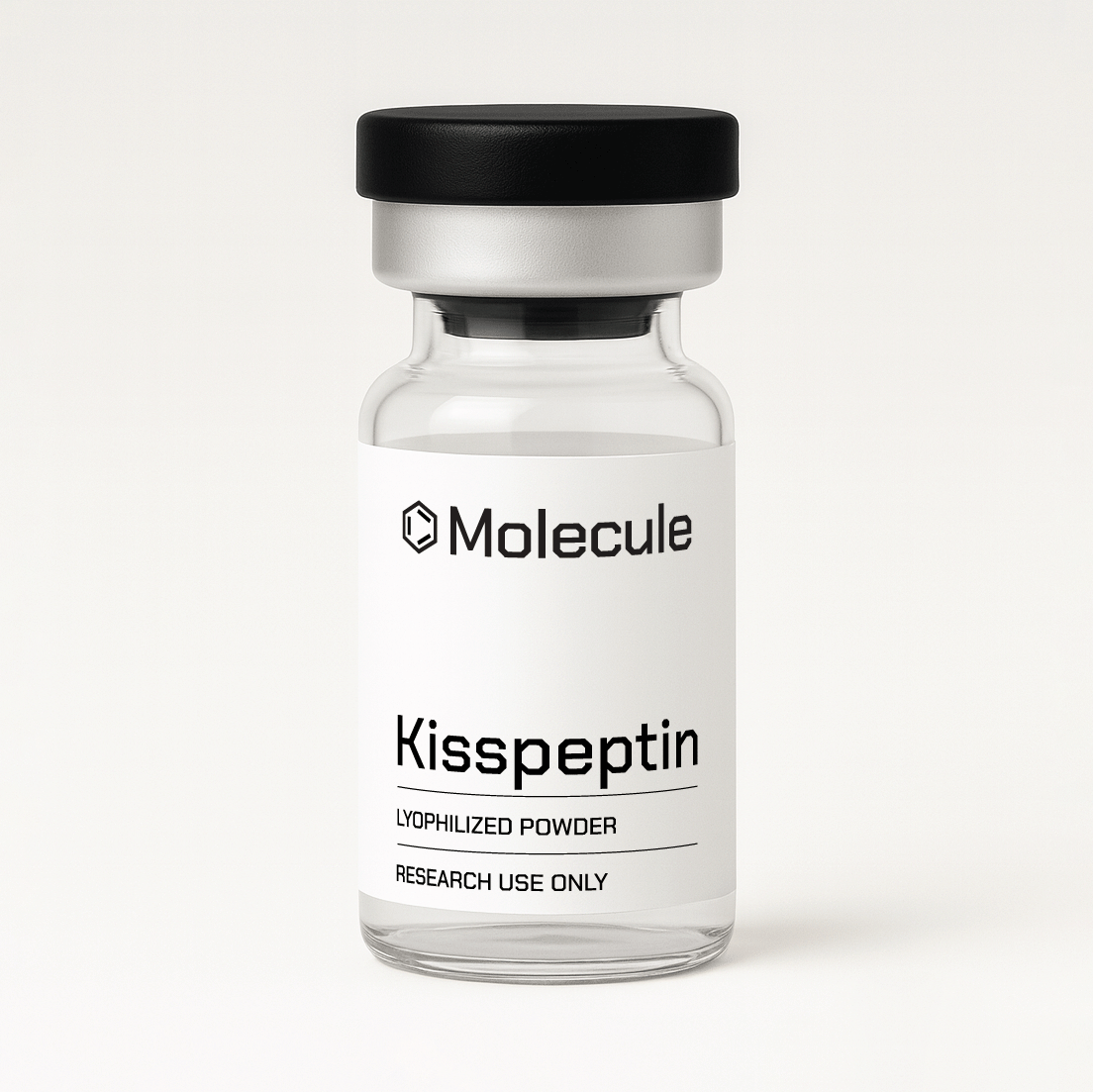
KissPeptin (Kisspeptin)
Synthetic Peptide Research Tool
Kisspeptin is a synthetic peptide derived from the KISS1 gene, widely utilized in laboratory and preclinical research to study neuroendocrine signaling and reproductive axis regulation. It functions as a ligand for the G-protein coupled receptor GPR54 (KISS1R), enabling exploration of downstream signaling pathways in cellular and animal models.
Kisspeptin research focuses on mechanistic investigation of peptide-receptor interactions, hormonal regulatory networks, and neuroendocrine communication, rather than clinical or therapeutic outcomes. Preclinical studies have examined its role in reproductive hormone modulation, hypothalamic-pituitary signaling, and associated intracellular pathways.
Peptide Identity and Molecular Profile
| Property | Description |
|---|---|
| Peptide Name | Kisspeptin-10 / Kisspeptin-54 (varies by isoform) |
| Peptide Class | Synthetic neuropeptide |
| Amino Acid Length | 10–54 residues (isoform-dependent) |
| Peptide Sequence | Kisspeptin-10: Tyr-Asn-Trp-Asn-Ser-Phe-Gly-Leu-Arg-Phe |
| Molecular Weight | ~1,500–6,400 Da (isoform-dependent) |
| Biological Origin | Encoded by the KISS1 gene, naturally expressed in hypothalamic neurons |
Chemical and Registry Information
| Property | Value |
|---|---|
| Molecular Formula | Reported in research literature; varies by isoform and salt form |
| CAS Number | 129906-86-3 (Kisspeptin-10) |
| PubChem CID | 16132947 |
| Synonyms | Kisspeptin, metastin, KISS1 peptide, KP-10, KP-54 |
| Source Notes | Synthetic, laboratory-grade, research-use peptide |
Biological Pathways Studied (Preclinical Research)
In preclinical research, Kisspeptin has been explored for its effects on cellular signaling, hormonal networks, and reproductive axis regulation, with a focus on molecular and mechanistic outcomes:
| Pathway / System | Research Context |
|---|---|
| GPR54/KISS1R Signaling | Investigated as a primary ligand for the KISS1 receptor (GPCR-mediated intracellular pathways) |
| Hypothalamic-Pituitary-Gonadal (HPG) Axis | Studied in preclinical models to explore gonadotropin-releasing hormone (GnRH) modulation and downstream LH/FSH signaling |
| Intracellular Calcium Signaling | Explored for roles in GPCR-mediated Ca²⁺ mobilization and second messenger cascades |
| Reproductive Hormone Regulation | Examined in vitro and in vivo for effects on gonadotropin secretion dynamics |
| Neuroendocrine Network Interactions | Studied in relation to hypothalamic neuron communication and regulatory feedback loops |
Research Applications
Kisspeptin is commonly employed in laboratory research for:
-
Studying GnRH release mechanisms in hypothalamic models
-
Investigating GPR54-mediated intracellular signaling
-
Preclinical exploration of reproductive hormone regulatory networks
-
Neuroendocrine and hypothalamic cell culture studies
-
Comparative analyses of peptide isoform signaling dynamics
Note: All applications are restricted to preclinical, in vitro, or animal research. Kisspeptin is not intended for therapeutic, diagnostic, or clinical use.
Storage and Handling Guidelines
Store Kisspeptin in a cool, dry environment, protected from light. Maintain standard laboratory storage and handling practices to preserve peptide stability. Handle all peptides under institutional safety protocols.
Lyophilized Powder
Kisspeptin is provided as a lyophilized powder, produced via freeze-drying to remove residual moisture while maintaining peptide conformation and chemical stability. Lyophilized peptide supports accurate quantification and reproducibility in controlled laboratory experiments.
Shelf Life After Reconstitution
Following reconstitution, Kisspeptin is no longer in its dry state, and stability is dependent on storage conditions, solvent choice, temperature, and handling practices. Reconstituted material is generally considered suitable for short-term laboratory use, with planning for stability incorporated into experimental design. Actual usability may vary according to specific research conditions.
Compliance Notice
Kisspeptin is supplied exclusively for laboratory and preclinical research. It is not intended for human, veterinary, therapeutic, or diagnostic use, and purchasers must adhere to all relevant regulatory and safety requirements for research peptides.