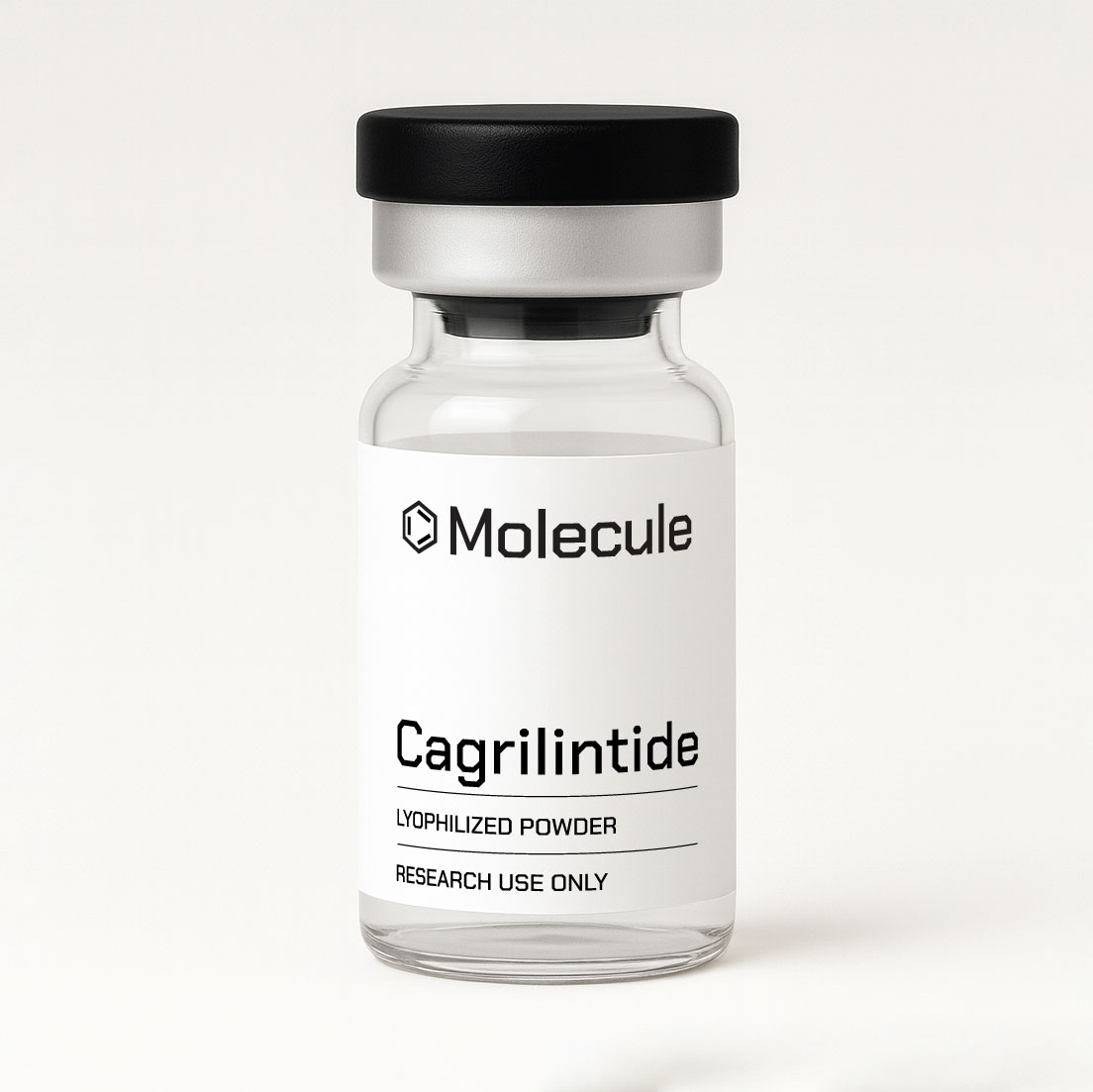
Cagrilintide

Cagrilintide is a long-acting synthetic analog of the hormone amylin that is utilized in laboratory research involving metabolic signaling and appetite-regulation pathways. It is commonly studied in preclinical models investigating energy balance, gastric signaling, and neuroendocrine mechanisms associated with metabolic regulation.

$150.00

Size

10mg

Fast processing & shipping

Orders are processed and shipped within 1–2 business days to ensure timely delivery of research materials.

All sales final

Due to the nature of laboratory research materials, all sales are final once shipped. No returns or refunds on delivered items.

Limited refund eligibility

Refunds or replacements are only issued for incorrect, damaged, or undelivered orders. Claims must be submitted within 48 hours with supporting photos.

Description

Cagrilintide

Cagrilintide is a long‑acting synthetic analog of amylin, a peptide hormone co‑secreted with insulin by pancreatic β‑cells. It is widely utilized in laboratory and preclinical research investigating metabolic signaling, appetite‑regulation pathways, and neuroendocrine mechanisms involved in energy balance.

The peptide is structurally modified to enhance receptor engagement and biological half‑life in experimental models, and has been reported to interact with amylin receptor complexes formed by calcitonin receptor (CTR) and receptor activity‑modifying proteins (RAMPs). In laboratory settings, Cagrilintide has been studied for its involvement in central appetite‑regulation signaling, gastric regulatory pathways, and metabolic feedback mechanisms associated with nutrient intake.

Due to its receptor-targeted profile and prolonged activity in preclinical systems, Cagrilintide is frequently used in metabolic and endocrine research models examining signaling interactions between peripheral metabolic hormones and central nervous system regulatory circuits. Preclinical studies have explored how amylin receptor activation may influence satiety signaling networks, gastric emptying pathways, and hypothalamic neuropeptide regulation.

Rather than targeting a single metabolic process, Cagrilintide is studied for its role in integrated metabolic signaling systems, making it a compound of ongoing interest for researchers investigating coordinated regulation of appetite, energy balance, and neuroendocrine metabolic pathways.

Peptide Identity and Molecular Profile

Property Description
Peptide Name Cagrilintide
Peptide Class Synthetic amylin receptor agonist
Amino Acid Length Peptide analog of human amylin (sequence and length may vary by specification)
Molecular Weight Peptide molecular weight in the low‑kilodalton range (see lot‑specific documentation)
Biological Origin Synthetic analog derived from human amylin

Chemical and Registry Information

Property Value
Molecular Formula Defined per specific analog (see certificate of analysis)
CAS Number 1415456‑99‑3
PubChem CID 156590429
Synonyms Cagrilintide, AM833

Biological Pathways Studied (Preclinical Research)

In laboratory and preclinical research environments, Cagrilintide has been investigated for interactions with several metabolic and neuroendocrine signaling pathways.

Pathway / System Research Context
Amylin Receptor Signaling Studied for interactions with calcitonin receptor/RAMP complexes
Hypothalamic Appetite Regulation Investigated in central nervous system satiety signaling models
Gastric Signaling Pathways Examined in gastric emptying and nutrient‑signaling studies
Metabolic Feedback Systems Explored in endocrine and metabolic regulation research

Research Applications

Cagrilintide is commonly used in laboratory research involving:

  • Metabolic signaling pathway investigations

  • Appetite and satiety signaling research

  • Neuroendocrine metabolic regulation studies

  • Endocrine hormone signaling models

  • Energy balance and nutrient signaling research

Storage and Handling Guidelines

Store Cagrilintide in a cool, dry environment protected from light to maintain peptide stability. Appropriate laboratory storage conditions should be maintained to preserve molecular integrity. Handle all research peptides according to standard laboratory safety protocols.

Lyophilized Powder

Cagrilintide is supplied in lyophilized powder form, produced through freeze‑drying to remove residual moisture while preserving peptide structure and chemical stability. This format supports accurate measurement and reproducibility in controlled research protocols.

Shelf Life After Reconstitution

Once reconstituted, Cagrilintide is no longer in its lyophilized state, and its stability characteristics differ from those of the dry powder. In laboratory research environments, reconstituted peptide materials are generally regarded as having a short‑term usable shelf life, commonly measured in days rather than weeks depending on experimental conditions.

Researchers typically account for post‑reconstitution stability as part of experimental planning and quality control procedures. Stability may vary depending on storage conditions and laboratory protocols.

Research Use Only

Cagrilintide is supplied for research use only and is not intended for human or veterinary use.
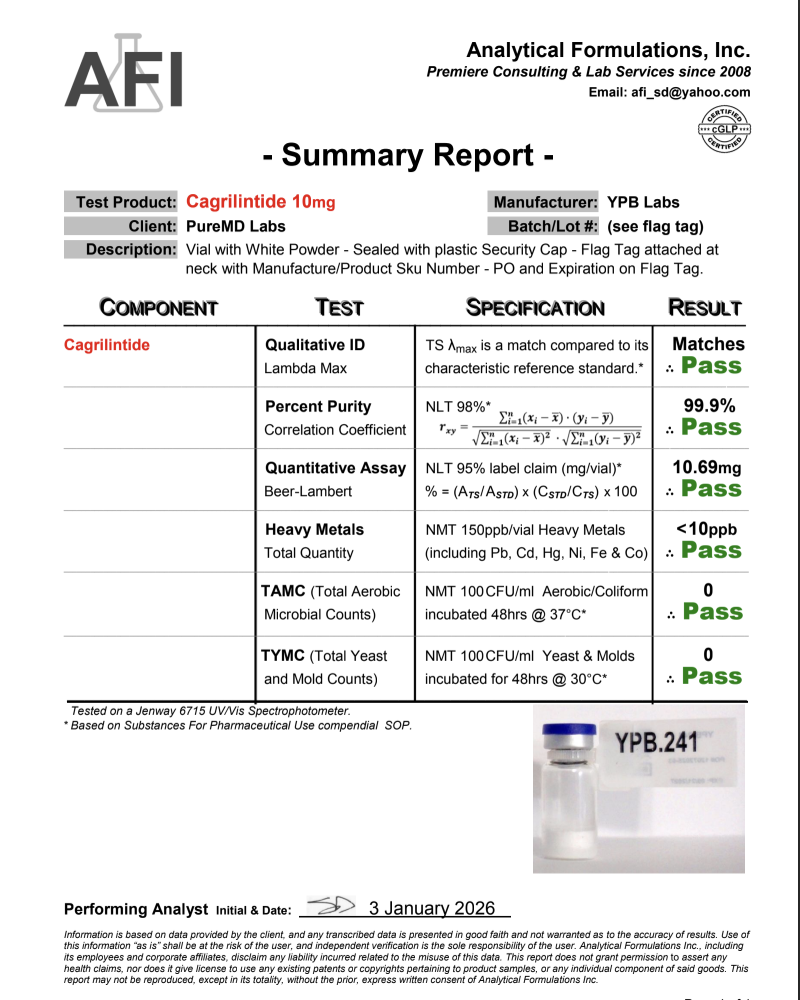
Cagrilintide Research Overview

Cagrilintide is a long‑acting synthetic peptide analog of amylin, a hormone co‑secreted with insulin by pancreatic β‑cells that participates in metabolic signaling and appetite‑regulation pathways. The peptide contains 37 amino acids and has been engineered in preclinical development to support increased receptor engagement and prolonged exposure in experimental systems. Cagrilintide is utilized in preclinical and in vitro research investigating amylin receptor signaling, neuroendocrine regulation, and metabolic feedback mechanisms associated with energy balance.

In laboratory research environments, Cagrilintide is studied for its interaction with amylin receptor complexes, which consist of the calcitonin receptor combined with receptor activity‑modifying proteins (RAMPs). Activation of these receptor systems is investigated for its influence on central nervous system signaling pathways, hypothalamic regulatory circuits, and gastrointestinal feedback signaling involved in metabolic communication networks.

Experimental research has explored Cagrilintide activity in models examining satiety signaling pathways, hypothalamic neuropeptide regulation, and endocrine signaling interactions between peripheral metabolic tissues and central regulatory systems. Laboratory investigations emphasize receptor‑mediated signaling mechanisms and metabolic pathway coordination rather than therapeutic outcomes.

Note: All mechanistic insights derive from laboratory or animal models. This compound is research‑use only and not intended for human or veterinary application.


Mechanism of Action in Laboratory Models

Cagrilintide has been investigated across several metabolic and neuroendocrine signaling pathways in preclinical research.

Amylin Receptor Activation
Laboratory models examine Cagrilintide binding to amylin receptor complexes formed by calcitonin receptors and receptor activity‑modifying proteins (RAMPs). Receptor‑binding assays and intracellular signaling studies evaluate downstream pathway activation.

Hypothalamic Signaling Pathways
Preclinical research investigates interactions with hypothalamic regulatory circuits, particularly neuronal populations involved in energy balance and metabolic signaling.

Gastric and Enteric Signaling
Experimental models examine signaling mechanisms associated with gastrointestinal regulatory pathways, including neural and endocrine communication between the gut and central nervous system.

Neuroendocrine Metabolic Regulation
Laboratory assays evaluate signaling interactions between peripheral metabolic hormones and central appetite‑regulation pathways, including neuropeptide signaling systems within hypothalamic structures.


Primary Research Findings

Mechanistic studies in preclinical and in vitro models demonstrate several areas of investigation.

Amylin Receptor Pharmacology
Research involving receptor‑binding assays evaluates Cagrilintide interactions with calcitonin receptor–RAMP complexes, which mediate amylin signaling pathways (Hay et al., 2015).

Hypothalamic Regulatory Networks
Experimental studies examine how amylin receptor activation influences neuropeptide signaling pathways within hypothalamic energy‑regulation circuits.

Gastrointestinal Feedback Signaling
Laboratory models exploring gut–brain communication investigate how amylin analogs interact with gastrointestinal signaling pathways and metabolic feedback systems.

Note: Reported findings represent mechanistic observations in laboratory research; direct clinical translation is not established.


Research Applications

Metabolic Signaling Research
Investigations include receptor‑binding assays and signaling studies involving amylin receptor pharmacology.

Neuroendocrine Regulation Studies
Laboratory models examine interactions between central nervous system regulatory circuits and peripheral metabolic signaling pathways.

Energy Balance Signaling Research
Experimental systems investigate signaling mechanisms involved in hypothalamic energy regulation and metabolic communication networks.


Comparative Research Context

Cagrilintide is frequently evaluated in comparison with other amylin analog peptides and metabolic signaling modulators. Comparative research focuses on receptor signaling characteristics, metabolic pathway activation, and neuroendocrine signaling interactions in vitro or in animal models rather than functional superiority.


Research Handling and Format

  • Lyophilized Powder: Provided freeze‑dried to support chemical stability and reproducibility.

  • Storage: Maintain in a cool, dry, light‑protected environment.

  • Reconstitution: Stability post‑reconstitution is short‑term and laboratory‑condition dependent.

  • Research Use Only: Intended solely for laboratory research purposes.


Peptide Identity and Molecular Profile

Property Description
Peptide Name Cagrilintide
Peptide Class Synthetic amylin receptor agonist
Amino Acid Length 37 residues
Molecular Weight In the low‑kilodalton range (see product documentation for exact value)
Biological Origin Synthetic analog derived from human amylin

Research Role
Preclinical studies on metabolic signaling, neuroendocrine regulation, and amylin receptor pathways.

References
Hay, D. L., Chen, S., Lutz, T. A., Parkes, D. G., & Roth, J. D. (2015). Amylin: pharmacology, physiology, and clinical potential. Pharmacological Reviews, 67(3), 564–600.
Lutz, T. A. (2010). The role of amylin in the control of energy homeostasis. American Journal of Physiology – Regulatory, Integrative and Comparative Physiology, 298(6), R1475–R1484.
Andreassen, K. V., et al. (2021). Cagrilintide: a long‑acting amylin analog for metabolic research. Diabetes, Obesity and Metabolism, 23(6), 1340–1349.

COA

Related products

Disclaimer: For Research Purposes Only

The owner of this website has made a commitment to accessibility and inclusion, please report any problems that you encounter using the contact form on this website. This site uses the WP ADA Compliance Check plugin to enhance accessibility.
0
    0
    Your Cart
    Your cart is emptyReturn to Shop